

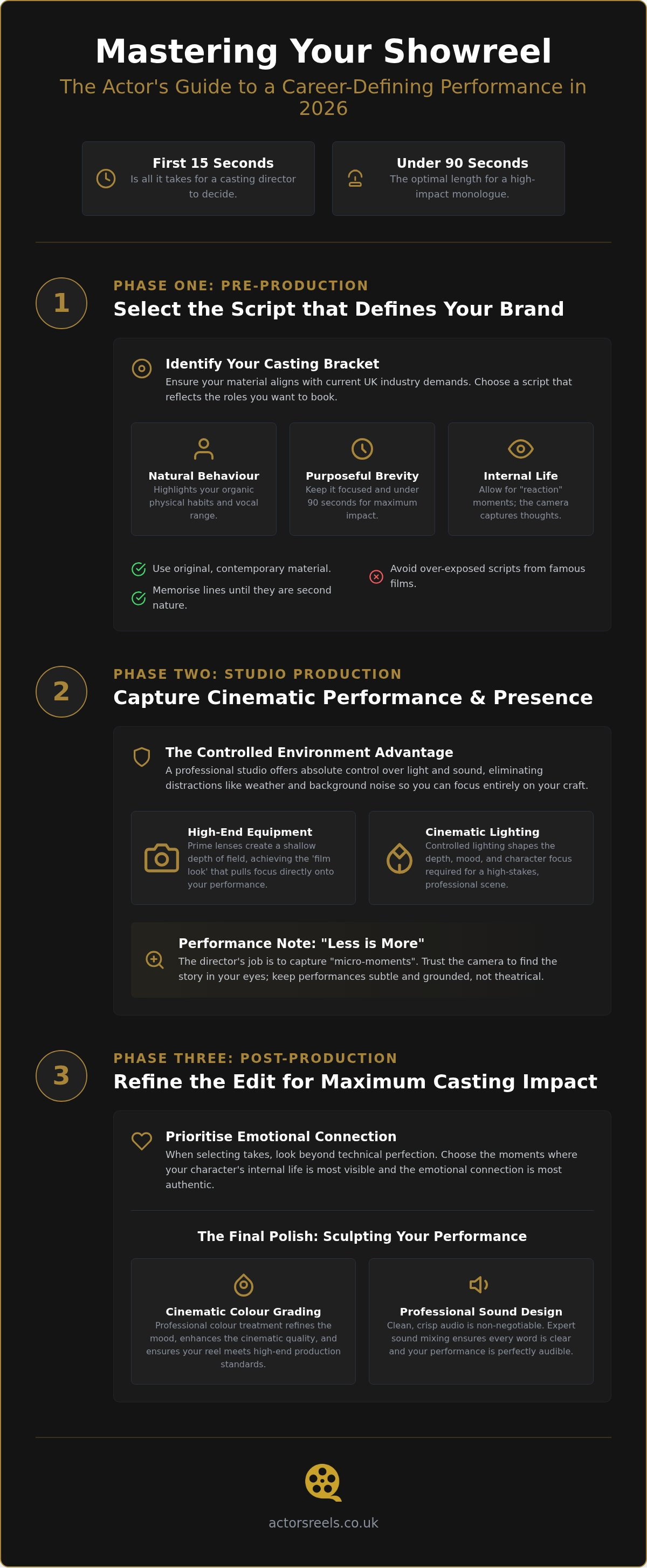
In 2026, a casting director decides your career's trajectory in the first fifteen seconds of your reel. Industry standards confirm that suitability is often determined before you even finish your first line. If those opening moments don't command attention, the rest of your performance won't even be seen. You probably feel the weight of this every time you wonder how to prepare for your showreel shoot. You worry about choosing the wrong material. You fear looking like an amateur on high-end equipment.
It's natural to feel anxious about the transition from a basic self-tape to a high-end production. This guide eliminates that uncertainty. We'll help you master every stage of the process, from strategic script selection for your cinematic monologue to high-impact studio performance. You'll learn how to navigate the filming day with confidence and ensure your portfolio meets the rigorous 2026 Spotlight requirements. Walk away with a cinematic asset that positions you as a premium, results-driven professional. Let's turn your preparation into a career-defining performance.
Key Takeaways
- Identify your specific casting bracket before script selection to ensure your material aligns with current UK industry demands.
- Learn exactly how to prepare for your showreel shoot by prioritising scripts that highlight your natural behaviour and vocal range.
- Utilise the controlled environment of a professional studio to guarantee consistent, high-end production value without the distractions of location filming.
- Maximise your casting impact by selecting takes that prioritise authentic emotional connection, refined through cinematic colour grading and sound design.
Pre-Production: Selecting the Script that Defines Your Brand
Your script is the foundation of your cinematic asset. It isn't just dialogue; it's a strategic blueprint for your career advancement. Before you browse a single page, identify your specific casting bracket. UK casting directors need to see exactly where you fit in the current market. If you're consistently called for gritty procedural dramas, don't choose a whimsical period comedy. This clarity is the first step in how to prepare for your showreel shoot.
A cinematic monologue must be lean and purposeful. Focus on material that prioritises these three elements:
- Natural Behaviour: Choose text that highlights your organic physical habits and vocal range.
- Brevity: Keep the script under 90 seconds. Industry attention spans in 2026 are shorter than ever.
- Internal Life: Ensure the dialogue allows for "reaction" moments. The camera captures what you think, not just what you say.
Aligning Script Choice with Casting Intent
Select material that mirrors the tone of the productions you want to book. Avoid over-exposed scripts from famous films. Comparing your performance to an A-list actor is a losing game that highlights your limitations rather than your strengths. Instead, find or commission original material that feels contemporary. Knowing how to prepare for your showreel shoot means understanding that the edit begins in the writing phase. Focus on the "moment before" to ensure your character feels lived-in from the very first frame.
The Importance of Professional Script Preparation
Treat your script like a technical document. Standardise the format so the production team can easily identify technical cues and camera angles. This professional courtesy ensures the filming day runs with the efficiency of a high-end set. Memorise your lines until they are second nature. This isn't just about accuracy; total fluency allows you to remain open to directorial adjustments on the day. When you aren't hunting for words, you can focus on the subtle emotional shifts that define a professional cinematic performance.
Studio Production: Capturing Cinematic Performance and Presence
Once your script is locked, the focus shifts to technical execution. The studio environment is where your preparation meets professional precision. Unlike location filming, a studio offers absolute control. You won't be fighting the British weather or background traffic noise. This stability allows you to focus entirely on the craft without external distractions.
Professional production relies on high-end camera equipment and prime lenses to achieve a shallow depth of field. This "film look" isn't just an aesthetic choice; it pulls the viewer's eye directly to your performance by blurring out the background. Controlled lighting creates the depth, mood, and character focus required for a high-stakes scene. This technical environment is a critical part of how to prepare for your showreel shoot. You must trust the equipment to do the heavy lifting so your performance can remain subtle and grounded.
The director's role in a studio setting is to capture "micro-moments." These are the subtle flickers of thought and shifts in eye contact that a high-definition camera captures best. On a professional set, less is often more. Your preparation should allow you to inhabit the character fully, letting the camera find the story in your eyes rather than through over-projected stage movements.
The Advantage of the Solo Monologue Format
Filming a cinematic monologue reel ensures the spotlight remains fixed on you. There is no risk of a scene partner overshadowing your performance or causing technical delays through lack of preparation. You own every second of screen time, allowing casting directors to assess your range without distraction.
This format allows for a streamlined production schedule that respects your time. It maximises your investment by focusing exclusively on your unique screen presence. If you want to ensure your work stands out to top UK casting directors, choosing a bespoke studio production is the most efficient route to professional results. You'll leave the set knowing every frame was designed to showcase your individual talent.
Post-Production: Refining the Edit for Maximum Casting Impact
The work doesn't end when the cameras stop rolling. Post-production is where your raw performance is sculpted into a high-impact marketing tool. The edit begins by identifying the strongest take. Don't just look for technical perfection. Prioritise the moments of authentic emotional connection where your character's internal life is most visible. This discerning eye is a vital part of knowing how to prepare for your showreel shoot. You need to recognise which nuances will resonate with a casting director in those crucial first fifteen seconds.
Professional colour grading then transforms the raw footage. We apply a specific film aesthetic and palette that matches the genre of your script. This isn't just about making it look nice. It's about psychological impact. A gritty crime monologue requires a different visual temperature than a light-hearted romantic comedy. Sound design and subtle scoring further enhance this emotional arc. These elements should support your dialogue, never distract from it. High-quality audio ensures every breath and beat is heard with cinematic clarity.
Technical delivery is the final hurdle. Files must be rendered in formats specifically optimised for Spotlight and other UK casting platforms. This means balancing high-definition 4K resolution with manageable file sizes to prevent upload errors. A beautifully shot reel is useless if the platform rejects it. Your preparation ensures that the final result is a seamless, professional asset that reflects your commitment to the craft.
Integrating Your Reel into a Professional Portfolio
Your finished reel must meet specific technical standards. Follow the latest Spotlight showreel requirements to ensure your footage is approved without delay. Once the master file is ready, create short promo clips. These fifteen-second snippets are perfect for professional social media channels, offering a quick hook for agents browsing your profile. Finally, ensure you know how to build your acting portfolio by pairing your new reel with high-end headshots. A cohesive brand across all platforms is what separates the working professional from the amateur. This integrated approach ensures your portfolio captures the attention of the industry's most influential decision-makers.
Secure Your Next Major Role
A professional showreel is the most powerful marketing tool in an actor's arsenal. By identifying your specific casting bracket and selecting a script that highlights your natural behaviour, you've already laid the groundwork for success. Transitioning from pre-production planning to the technical precision of a studio environment allows you to focus on the micro-moments that capture a casting director's attention. Mastering how to prepare for your showreel shoot is about more than just memorising lines; it's about aligning your creative vision with high-end production standards.
Don't leave your career advancement to chance with unpolished self-tapes or unpredictable location filming. Your performance deserves the depth and mood that only controlled cinematic lighting and expert post-production can provide. Book your cinematic monologue showreel with Actors Reels today. We provide premium studio-based production and a specialist monologue focus, offering expert industry direction for both professional and student actors across the UK. It's time to stop worrying about the technicalities and start delivering the performance of your life. We're ready to help you capture it.
Frequently Asked Questions
How long does the showreel script to screen process take?
The script-to-screen process typically spans two to three weeks. This timeline includes your initial script selection, the filming session, and roughly seven to ten working days for professional post-production. Sound design and colour grading are precise tasks that shouldn't be rushed. Planning your shoot at least a month before a major casting deadline ensures you have a polished asset ready for submission.
Do I need to write my own script for a professional showreel?
You don't need to write your own material, but original scripts are highly recommended. Using existing TV or film scripts invites direct comparison with established actors. Most performers find success by commissioning bespoke monologues or selecting contemporary pieces that align with their casting bracket. This ensures the focus remains on your unique performance rather than a familiar story.
What is the difference between a self-tape and a professional cinematic showreel?
A self-tape is a response to a specific casting call, whereas a professional cinematic showreel is your permanent marketing flagship. Professional reels utilise controlled studio lighting, prime lenses, and cinematic sound design to simulate high-end TV production values. Knowing how to prepare for your showreel shoot means understanding that this asset must demonstrate your ability to work on a professional set, not just in front of a ring light.
How should I prepare for my showreel filming day in the studio?
Success on the day depends on total script fluency. Memorise your lines until they're instinctive so you can respond to directorial notes without hesitation. Arrive well-rested and bring three wardrobe options that suit your character's tone but avoid busy patterns. When learning how to prepare for your showreel shoot, prioritise vocal health and physical readiness to ensure you can sustain a high-intensity performance throughout the session.


