
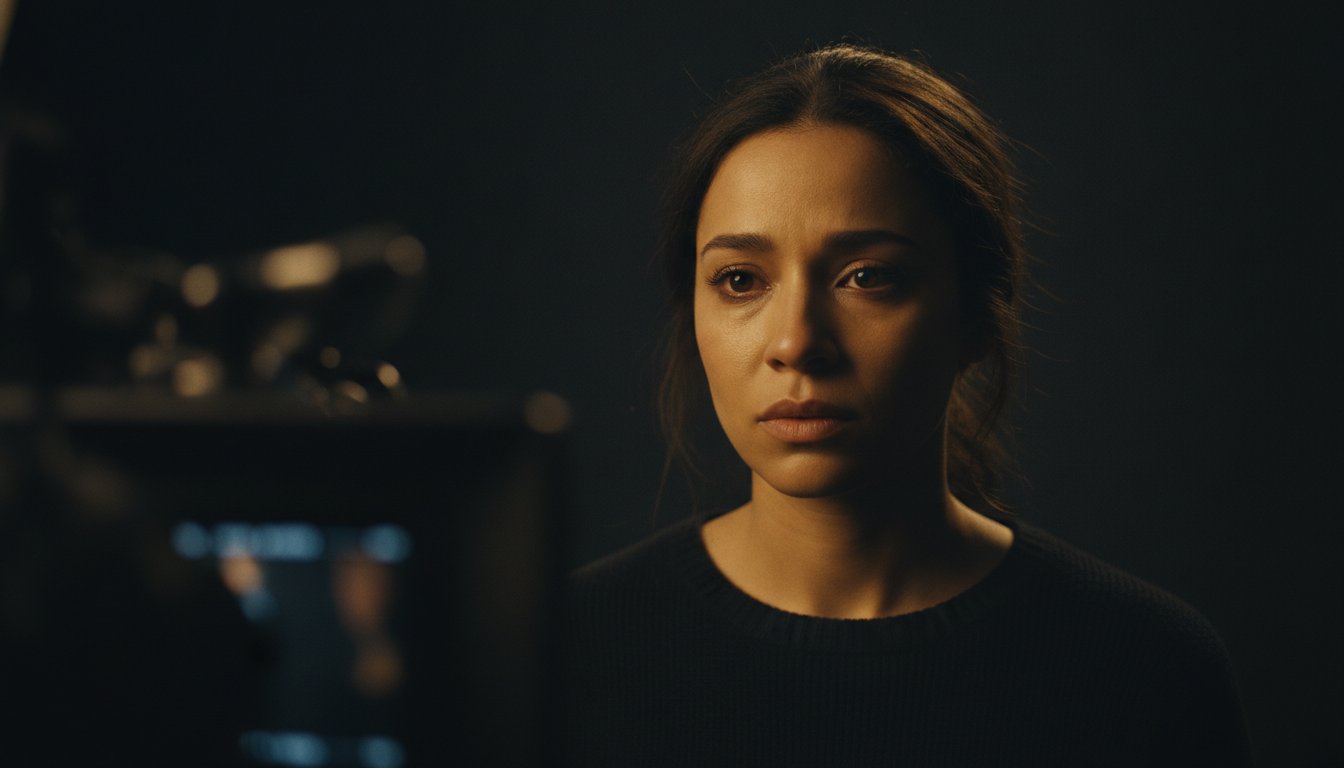
What if sixty seconds of film could do more for your career than a three-minute montage of grainy student projects? It is a question many actors ask whilst staring at a hard drive full of self-tapes that fail to capture their true essence. You know the frustration of having the talent but lacking the high-end visuals to prove it to a casting director. Poor quality audio and flat lighting can kill a performance before you have even delivered the first line.
A cinematic monologue reel is no longer a fallback for those without a feature film credit; it is a tactical weapon for the 2026 casting landscape. We agree that your marketing materials should reflect your professional standard, not your technical limitations. You will discover how a cinematically produced monologue can transform your casting prospects and showcase your professional range with the precision of a high-budget production. We will preview the industry shift toward hook-focused reels and explain how to present a brand that demands attention from the very first frame.
Key Takeaways
- Understand how a studio-produced cinematic monologue reel captures a casting director's attention in under ten seconds.
- Learn why professional lighting and cinema-grade production are the secret ingredients for a high-end screen presence.
- Master the "less is more" approach to script selection to ensure your performance remains the central focus.
- Discover how to effectively integrate new footage into Spotlight and IMDb profiles for maximum industry visibility.
- Explore how to use headshot add-ons to build a cohesive and recognisable professional brand across all platforms.
What is a Cinematic Monologue Reel and Why Does it Matter?
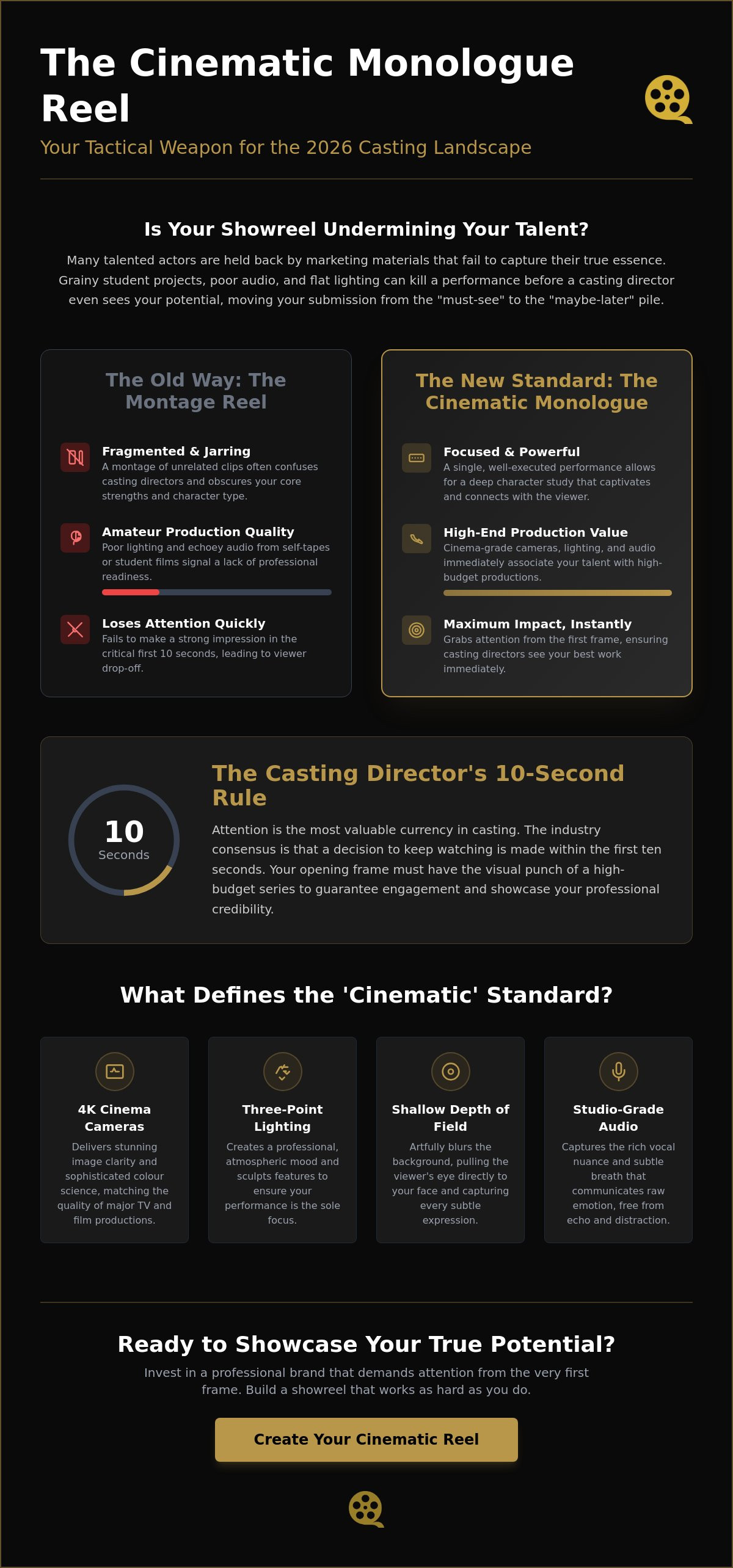
A cinematic monologue reel is a studio-produced, high-end recording of a single performance using cinema-grade equipment. It's more than a video. It's a statement of intent. In the competitive UK casting landscape of 2026, your digital footprint is often your first audition. High production value communicates professional readiness that a standard self-tape cannot match. When a casting director sees professional lighting and hears crisp, studio-grade audio, they immediately associate your talent with high-budget productions. This psychological edge is vital. It moves you from the "potential" pile to the "professional" pile in seconds.
Precision matters in modern casting. A single, well-executed scene can define your "type" more effectively than a dozen unrelated clips. By focusing on a single, high-impact moment, you allow the viewer to connect with your performance without the distraction of poor technical quality or jarring transitions. The goal is simple: make it impossible for them to look away.
The Shift from Montage to Monologue
The industry has reached a tipping point. Fragmented montages that lean on old student films or low-budget shorts are no longer effective. Casting directors now prioritise 60 seconds of brilliance over three minutes of mediocre clips. A focused monologue allows for a deeper character study that quick cuts often obscure. To appreciate the weight of this format, it helps to revisit the core definition of What is a Monologue as a narrative tool. In a reel context, this focused approach gives you the space to breathe and react within a character's world. The solo showreel has emerged as a legitimate industry standard in the UK. It provides a streamlined way for agents to pitch their clients for specific high-end roles with total confidence.
Defining the 'Cinematic' Standard for Actors
There is a vast difference between a recording and a production. A standard recording captures what is there; a professional production creates an atmosphere. Moving beyond the self-tape means embracing 4K resolution and the sophisticated colour science of digital cinema cameras. This filmic quality is essential for actors aiming for roles in major TV dramas or feature films. It isn't just about the equipment. It's about the technical precision of three-point lighting and the deliberate use of depth of field. These elements pull the viewer’s focus directly to your eyes and your performance. By removing the distractions of a home environment, you ensure your talent is the only thing the casting director sees. High production value isn't a luxury. It's the price of entry for the modern screen actor.
To see how high-end visual storytelling is captured in still form, you can learn more about Galerie Prints and their curated collection of fine art cinema imagery.
Why Casting Directors Favour High-End Monologue Reels in 2026
Casting directors don't have time to hunt for talent buried in poorly lit clips or shaky self-tapes. They need to see your potential instantly. A cinematic monologue reel serves as high-fidelity proof of concept. It signals that you are an actor who invests in their brand with serious intent. High production value eliminates the "guesswork" for the viewer. It removes the clunky distractions of messy backgrounds or amateur scene partners that often plague traditional reels. You are the sole focus. Every frame is designed to support your performance, not distract from it.
When you present a polished, studio-produced piece, you aren't just showing a performance. You're showing a finished product. This level of professionalism suggests you're ready for the rigours of a high-end film set. It builds trust before you even step into the audition room. It shows you understand the technical requirements of the screen. In a market where thousands of actors compete for a handful of roles, this clarity is your greatest advantage.
Immediate Impact and the 10-Second Rule
Attention is the most valuable currency in 2026. Most casting directors will decide whether to keep watching within the first ten seconds of playback. Your first frame must look like a still from a high-budget series. Cinematic lighting creates an immediate "star quality" by defining your features and setting a specific, professional mood. High-fidelity audio is equally critical. It captures the subtle breath and vocal nuance that communicate raw emotion. If the audio is thin or echoey, the emotional connection breaks instantly. You lose the audience. Professional production ensures that your first impression is a lasting one.
Showcasing Specific Casting Types
Versatility is often misunderstood by actors starting out. You shouldn't try to show "everything" in a single minute. Instead, use your monologue to double down on your most bankable character types. Whether it's the gritty detective or the period-drama lead, a single, well-chosen piece helps casting directors "see" you in that specific world immediately. It is a tactical tool for those looking to pivot. If you have been pigeonholed in comedy but want to move into gritty drama, a cinematic monologue provides the visual evidence you need to change perceptions. You can find more advice on How to Prepare for Your Cinematic Monologue Session to ensure your performance matches the high-end visuals.
This is about total control of your image. You control the narrative, the look, and the sound. You aren't waiting for a production company to release footage that might never see the light of day. You are taking charge of your career advancement. If you're ready to elevate your professional portfolio, consider how a professionally produced monologue can bridge the gap between where you are and where you want to be. It is the difference between asking for an opportunity and showing you are ready for it.
Cinematic vs. Standard Recording: The Technical Edge
The technical edge of a cinematic monologue reel lies in the transition from simply "recording" a performance to "producing" a scene. A standard recording, like a self-tape, is a utility. It captures information. A cinematic production, however, captures an atmosphere. It uses technical precision to guide the viewer's emotional response. When you step into a studio, you aren't just standing in front of a camera. You are entering a controlled environment where every element is engineered to elevate your screen presence. The difference is found in the execution.
Professional production value signals to a casting director that you understand the medium. It shows you know how to work with the camera, not just in front of it. By removing the technical barriers between your performance and the viewer, you allow your talent to speak for itself. Every choice, from the lens used to the position of a light, is deliberate. This is the difference between a video that looks like an audition and a reel that looks like a film.
Lighting and Depth of Field
Lighting is the invisible director. It dictates where the audience looks and how they feel about your character. In a professional studio, we use three-point lighting setups to sculpt the face. This adds dramatic depth and ensures your features don't appear flat or washed out. Studio-controlled lighting beats natural light because it is consistent. You won't have to worry about a cloud passing the sun and changing the mood of your performance mid-sentence. It stays perfect for every take.
The use of "bokeh" is another critical differentiator. By using cinema-grade lenses with a shallow depth of field, we blur the background into a soft, textured wash. This keeps all the focus on your eyes. In film, the eyes are where the truth lives. If the background is sharp and distracting, the viewer's attention wanders. A cinematic reel ensures your performance is the only sharp thing in the frame. It creates a professional, high-end look instantly.
Professional Sound and Colour Grading
Audio is exactly 50% of the cinematic experience. Many actors overlook this. They focus on the visual but forget that room hiss, echo, or background traffic noise can kill a performance. Professional sound design removes these distractions. It provides a clean, intimate recording that captures the quietest whisper with clarity. When the sound is crisp, the audience feels closer to the character. It creates an intimacy that home setups cannot replicate. It's about immersion.
Colour grading is the final layer of the technical edge. It isn't just about making the picture look "nice". It's about genre alignment. A gritty crime drama requires a different colour palette than a bright, punchy comedy. We use professional colour grading to match the visual tone to the script's emotional weight. This creates a cohesive, "filmic" look that makes your reel feel like a clip from a high-end production. The final edit then paces the performance, ensuring the emotional beats land with maximum resonance.
How to Prepare for Your Cinematic Monologue Session
Preparation is the bridge between a good performance and a career-defining one. A cinematic monologue reel demands a specific type of readiness that differs from theatre or even standard self-tapes. You aren't just memorising lines. You are preparing to collaborate with a lens. Success in the studio depends on your ability to arrive with a clear vision, a settled mind, and a performance that is ready for the scrutiny of 4K resolution. Precision is everything. When the lighting is this deliberate and the frame is this tight, every flicker of thought is magnified.
Mental preparation is often the most overlooked step. You must arrive at the studio ready to deliver an honest performance from the very first take. This means being "off-book" to the point of instinct. If you are struggling to remember words, you cannot focus on the emotional truth of the scene. Arrive early. Stay focused. Trust the technical team to handle the visuals whilst you focus entirely on the character's internal world. This synergy between actor and crew is what creates filmic magic.
Selecting the Right Script
Less is more. For a cinematic reel, you need a script that offers a clear emotional arc within 60 to 90 seconds. Do not choose a piece that requires five minutes of exposition to make sense. The viewer should understand the stakes instantly. Avoid over-exposed or "cliché" monologues that casting directors have heard a thousand times. They want to see your unique interpretation, not a comparison to a famous film star.
Ensure the language and tone match your natural casting bracket. If you are regularly called for gritty, urban dramas, don't select a whimsical period piece. Use this session to reinforce your "brand" or to strategically pivot into a specific genre you are targeting. Your script choice should be a tactical decision based on where you want your career to go next.
Wardrobe and Visual Continuity
Your clothing should suggest the character without becoming a costume. We call this the "character-lite" approach. If you are playing a high-powered barrister, a sharp blazer is enough to communicate the role. You don't need the wig and gown. Selecting colours that complement your skin tone and the studio background is vital. Deep, solid colours often work best under cinematic lighting, whilst busy patterns or large logos can be incredibly distracting on camera.
Consistency is the hallmark of a professional. Ensure your grooming and wardrobe choices align with the character's status and emotional state. If the character is in a moment of crisis, a pristine, perfectly ironed shirt might feel out of place. Think about the details. Every visual element in the frame should tell the same story as your performance. To ensure your portfolio is ready for the industry's highest standards, book your cinematic monologue reel session and take the next step in your professional advancement.
Maximising Your Acting Portfolio with Actors Reels
Owning a high-end cinematic monologue reel is the first step. The second is strategic deployment. Your professional profiles on Spotlight and IMDb are the primary tools agents use to pitch you for major roles. A cinematic clip ensures that when a casting director clicks play, the visual quality matches the prestige of the platform. It provides a seamless transition from your list of credits to your current screen capabilities. Consistency across these digital profiles builds a narrative of reliability and professional readiness. You are no longer just an actor with potential. You are a professional with a proven screen presence.
Integration is about more than just uploading a file. It is about curateing a digital brand that works whilst you sleep. In the UK market, where competition is fierce, having a single, high-impact piece of footage can be more effective than a long, rambling montage. It allows you to lead with your strongest "type" immediately. This focused approach respects the time of industry professionals and demonstrates your understanding of modern casting requirements. You are providing exactly what they need to see, exactly where they expect to find it.
Beyond the Reel: Headshots and Social Promos
Your headshot and showreel must tell the same story about your "type". If your headshot suggests a gritty detective but your reel shows a period romantic, you create visual friction for the casting director. Integrating headshot add-ons into your session ensures your still images and moving footage share the same lighting, mood, and character essence. This unified portfolio looks consistently professional across all platforms. It removes any doubt about your current look or range. It presents a "complete package" that is ready for immediate hire.
Social media is the new casting frontier. Using social media promo clips allows you to stay top of mind with casting teams and agents. These short, high-impact fragments are perfect for Instagram or TikTok. They serve as digital business cards that can be shared or discovered instantly. By repurposing your cinematic monologue into bite-sized content, you maximise the return on your investment. You aren't just waiting for an audition. You are actively engaging the industry with high-end visuals that demand attention.
Booking Your Professional Session
Actors Reels provides a premium, studio-based alternative for UK actors who demand more than a standard self-tape. When you arrive at our professional studio, you aren't just another client. You are a collaborator. Our directors work with you to capture your best possible performance, combining technical precision with creative mentorship. We handle the 4K cameras, the three-point lighting, and the studio-grade audio. You focus entirely on the emotional truth of the scene. The process is streamlined, efficient, and designed for results.
The final product is a polished, filmic showreel that stands out in a crowded market. It is a tactical investment in your career advancement. Don't settle for mediocre visuals when you can have cinematic excellence. Elevate your acting career with a cinematic monologue reel from Actors Reels today.
Take Command of Your Casting Future
Your career deserves more than a collection of "make-do" footage. The industry in 2026 demands clarity and high production value. By prioritising a single, high-impact cinematic monologue reel, you remove the technical barriers between your performance and the casting director. You've learned how professional lighting and sound aren't just luxuries; they are essential tools for defining your "type" and proving your readiness for high-budget sets. A unified portfolio, where your headshots and footage tell the same story, is what separates the working professional from the hopeful amateur. It's about presenting a finished product that is ready for immediate hire.
Stop waiting for the perfect role to provide the footage you need. Create it yourself in a controlled, professional environment. We offer professional studio-based filming, cinema-grade equipment, and expert colour grading to ensure your talent is captured with absolute precision. Every session includes expert direction to help you deliver a performance that resonates with power and authenticity. Book your cinematic monologue session with Actors Reels today and take control of your professional narrative. Your best performance is yet to be seen. Let's make sure it's captured correctly.
Frequently Asked Questions
How long should a cinematic monologue reel be?
A single monologue should ideally run between 60 and 90 seconds. This duration allows enough time for a complete emotional arc without losing the viewer's attention. Casting directors often make a decision within the first ten seconds, so focus on high-impact performance rather than length. If the piece is too long, you risk the viewer clicking away before the climax.
Can I use a monologue reel if I already have a montage?
You can absolutely use a cinematic monologue reel alongside an existing montage. It acts as a tactical "hook" to lead your portfolio, providing an immediate high-end impression. Many actors use a standalone monologue to showcase a specific casting type or to pivot into a new genre that their previous footage doesn't cover. It adds a layer of current, high-fidelity proof to your professional materials.
Do I need to find my own script for the filming session?
Actors should select their own scripts to ensure the material aligns perfectly with their casting bracket and personal range. Choose a piece that avoids over-exposed clichés and offers a distinct emotional shift. Selecting your own material allows you to take ownership of the character and ensures you arrive at the studio fully prepared to deliver an authentic performance.
Is a monologue reel suitable for drama school graduates?
Recent graduates benefit immensely from professional monologue production. It provides high-quality footage that student films or rehearsal room recordings often lack. For those entering the industry, a polished reel bridges the gap between training and professional readiness. It ensures your first interaction with agents and casting directors is based on a high-end, cinematic standard.
What should I wear for my cinematic showreel filming?
Opt for "character-lite" attire that suggests a role without becoming a full costume. Solid, deep colours generally work best under studio lighting and help you stand out from the background. Avoid busy patterns, stripes, or large logos, as these create visual distractions on camera. Your clothing should support the character's status whilst remaining flattering to your skin tone.
How long does the post-production and editing process take?
The post-production phase is where the technical magic happens, including professional colour grading and sound design. Whilst specific timelines vary, the process is methodical to ensure every frame meets a filmic standard. This stage is vital for removing technical distractions and pacing the performance for maximum emotional resonance. It is the final step in transforming a recording into a professional production.
Can I get my headshots taken at the same time as my reel?
You can integrate headshot add-ons into your filming session to create a cohesive professional brand. This ensures your still images and moving footage share the same lighting, mood, and character essence. A unified portfolio across Spotlight and IMDb makes you more recognisable to casting teams. It demonstrates a level of professional preparation that signals you are ready for high-end work.
What is the difference between a self-tape and a cinematic monologue?
A self-tape is a basic utility for a specific audition request, whilst a cinematic monologue reel is a permanent marketing asset. Self-tapes are often recorded with minimal equipment in a home environment. A cinematic monologue uses cinema-grade cameras, three-point lighting, and professional sound design to create a "filmic" look. It mimics the production value of a high-budget TV or film set, elevating your perceived professional status.


