Your acting ability is irrelevant if a casting director switches off within five seconds. In the 2026 casting landscape, a mediocre reel is the fastest way to stay invisible. It is frustrating to feel overlooked whilst relying on grainy self-tapes or outdated student film clips that fail to capture your true essence. You know you have the talent, but without the right visual proof, the industry simply moves on. It is time to stop blending into the background and start commanding the frame.
This guide will show you how to project undeniable screen presence showreel quality that demands attention from the first second. You will discover why a cinematic monologue is now the ultimate tool for the modern professional, replacing cluttered montages with high-end, focused performance. We will break down the technical precision and internal focus required to make your reel look like a feature film. By the end, you will have a clear strategy to elevate your performance for the camera and secure the audition invites your career deserves.
Key Takeaways
- Understand why modern casting directors prioritise character "essence" over a traditional list of credits.
- Master the art of stillness to ensure your screen presence showreel projects maximum authority with minimum effort.
- Use the internal monologue technique to make your character's silent thoughts visible and compelling on screen.
- Discover how high-end post-production and studio lighting meet the rigorous Spotlight requirements for 2026.
- Shift your strategy from cluttered montages to cinematic monologues that highlight your unique individual range.
What is Screen Presence and Why Does Your Showreel Need It?
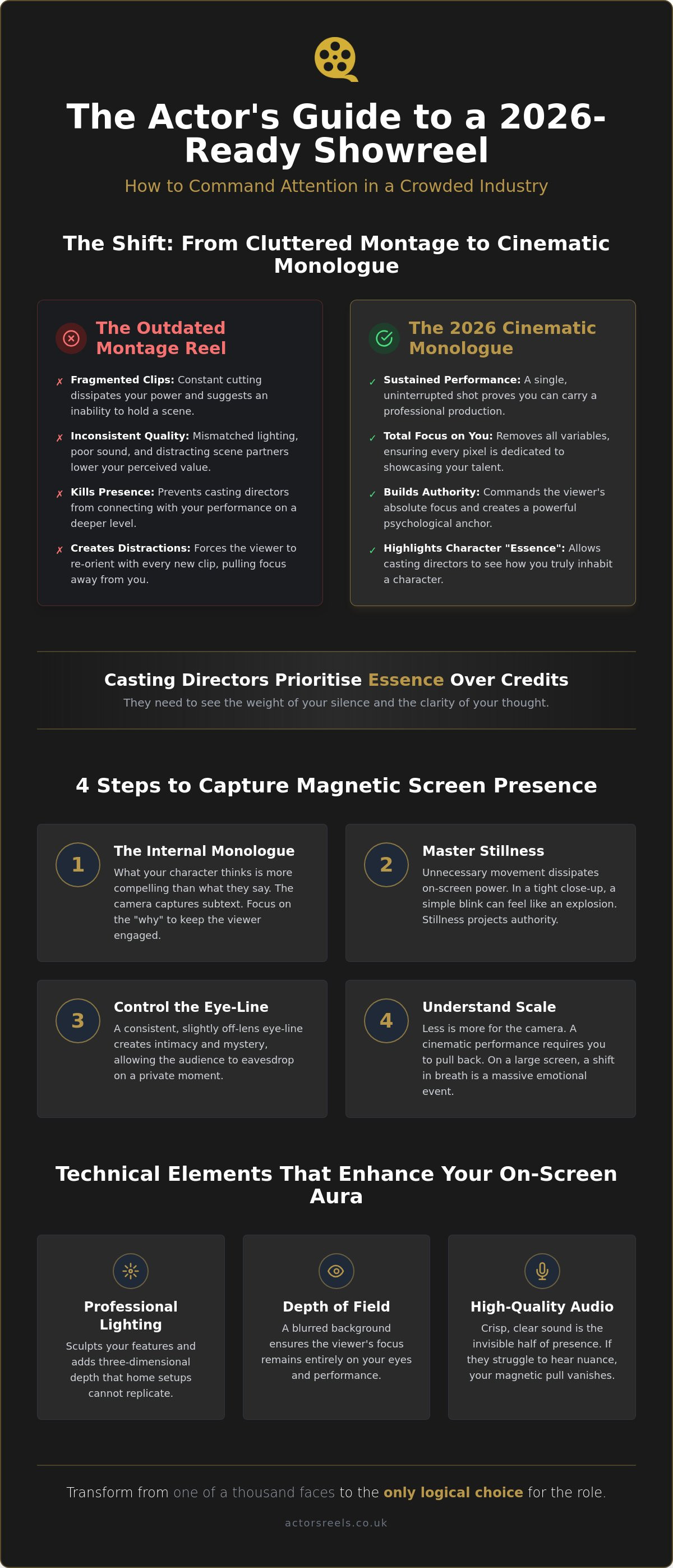
Screen presence is often treated as a mystical, unteachable quality. It isn't. In the context of a screen presence showreel, it is simply the ability to command a viewer's absolute focus whilst doing very little. It is the weight of your silence and the clarity of your thought. In 2026, casting directors have moved away from scanning a list of credits as their primary filter. They prioritise "essence". They want to see how you inhabit a character when the camera is inches from your face and there is nowhere to hide.
A high-quality cinematic monologue reel creates a psychological anchor for the viewer. It allows a casting director to stop being a "checker" and start being an audience member. When you provide a sustained, uninterrupted shot, you invite them to connect with your performance on a deeper level. This is the foundation of The art of acting for the screen; it is about being, not doing. Fast-paced montages often have the opposite effect. They are presence-killers. Constant cutting dissipates your power and suggests you cannot hold a scene on your own. A single, focused shot builds authority.
The Shift from Montage to Cinematic Monologue
Fragmented clips are a distraction. They often feature poor sound, mismatched lighting, or scene partners who inadvertently pull focus. This lowers the perceived value of your talent. By choosing a solo approach, you remove these variables. You ensure that every pixel on screen is dedicated to your performance. There is no one else to blame for a weak moment, and no one else to steal a strong one.
A cinematic monologue proves you can carry a professional production. It demonstrates that you understand the technical requirements of the frame. You aren't just an actor; you are a professional who knows how to work with the lens. This clarity is what secures the room. It transforms you from one of a thousand faces into the only logical choice for the role. It's about quality, not quantity.
How to Capture Magnetic Screen Presence on Camera
Presence isn't just about looking good. It is about what happens behind the eyes. To create a magnetic screen presence showreel, you must shift your focus from "acting" to "thinking". The camera is a lie detector; it reads your thoughts before you even speak. If your mind is blank, your performance will feel hollow. If you are unsure how to translate your stage energy to the screen, our cinematic monologue sessions are designed to help you find that precise balance.
- Step 1: The Internal Monologue. What your character thinks is always more compelling than what they say. The camera captures the subtext. Focus on the "why" behind every line to keep the viewer engaged.
- Step 2: Master Stillness. Unnecessary movement dissipates on-screen power. In a tight close-up, a simple blink can feel like an explosion. Stillness projects confidence and authority.
- Step 3: Control the Eye-Line. Your eyes are the windows to the character's soul. Keeping a consistent, slightly off-lens eye-line creates a sense of intimacy and mystery. It allows the audience to eavesdrop on a private moment.
- Step 4: Understand Scale. Less is almost always more. A cinematic performance requires you to pull back. On a large screen, a slight shift in breath is a massive emotional event.
Technical Elements That Enhance Your On-Screen Aura
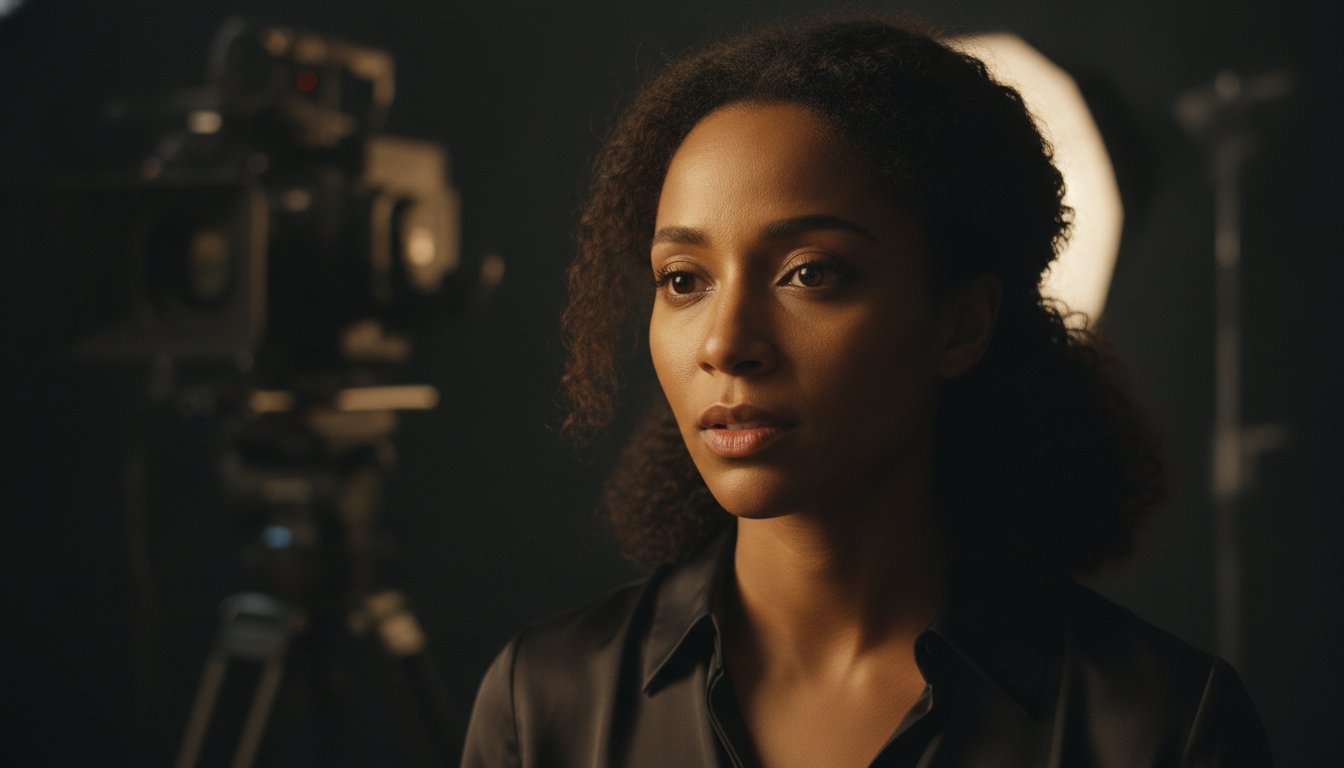
Professional lighting is the paintbrush of the cinematographer. It sculpts your features and adds a three-dimensional depth that home setups cannot replicate. Depth of field is equally vital; a blurred background ensures the viewer's focus remains entirely on your eyes. Don't forget audio. High-quality, crisp sound is the invisible half of presence. If the audience struggles to hear your nuance, your magnetic pull vanishes instantly.
Choosing the Right Material for Your Presence
Select a monologue that aligns with your casting type whilst demonstrating your unique range. Avoid over-dramatic "shouting" pieces. These often feel forced and "stagey" on camera, breaking the cinematic illusion you are trying to build. Following established showreel best practices ensures your material serves your personal brand. Choose a monologue that feels like a favourite suit; it should highlight your natural strengths while making you look effortless.
Elevating Your Portfolio with a Professional Cinematic Showreel
In the competitive casting market of 2026, "good enough" is a career-killer. Your portfolio is your digital shop window. If the footage looks amateur, you look amateur. Simply meeting the Spotlight showreel requirements is no longer the finish line; it is the absolute baseline. To truly compete, your material must possess the same visual DNA as the high-end projects you want to book. This requires professional post-production. Colour grading and a meticulous sound mix aren't luxuries. They are the essential cues that tell a casting director you belong on a professional set.
Integrating your new reel into your digital branding is the next step. High-impact clips on social media and a polished Spotlight profile create a cohesive professional image. Beyond the external benefits, there is a profound psychological shift. Walking into an audition knowing your screen presence showreel looks like a high-end film changes your energy. You stop asking for permission to be an actor. You start presenting yourself as a proven professional. This confidence is infectious and often becomes the deciding factor in the room.
Why Studio-Based Filming Outperforms Home Setups
A self-tape is functional; it's a quick check of your suitability for a specific role. A showreel is aspirational. It sells the "movie star" version of you to the industry. Opting for studio showreel filming is the most efficient way to secure a high-end screen presence showreel whilst removing technical friction. You eliminate the distractions of poor acoustics, flat lighting, and cluttered backgrounds that subconsciously signal "amateur" to a viewer.
In a controlled studio environment, every technical choice is made to enhance your specific aura. The presence of professional direction is equally vital. Having an expert director to push your performance ensures you capture your best work in every take. It transforms a simple recording into a high-end production that commands respect and captures the attention of the industry's top decision-makers.
Command the Frame and Secure the Room
Your career advancement depends on how you are perceived before you even step into the audition room. We have explored how screen presence is built through internal focus, physical stillness, and the strategic use of cinematic monologues. By prioritising high-end production over fragmented clips, you align yourself with the professional standards casting directors now demand. A magnetic screen presence showreel is your most powerful asset; it transforms you from a face in a database into a compelling artist who belongs on a professional set.
Don't leave your first impression to chance or grainy home recordings. Our studio provides cinematic studio production and professional industry-standard post-production designed specifically for Spotlight and top-tier agents. It is time to invest in a portfolio that reflects your true potential and provides the technical polish your talent deserves. Stop blending into the background and start leading the scene.
Capture your screen presence with our Cinematic Monologue Showreels and give the industry a reason to stop scrolling. Your next big role is waiting for the actor who knows exactly how to command the lens.
Frequently Asked Questions
What is the ideal length for a screen presence showreel in 2026?
The ideal length for a screen presence showreel in 2026 is between two and three minutes total. Industry standards now favour shorter, high-impact reels that grab attention within the first few seconds. Avoid long, rambling scenes; every second must justify its place. If you don't have enough professional-grade footage to fill two minutes, it's better to have a single, powerful one-minute monologue than to include filler that lowers your overall quality.
Can I show screen presence in a monologue without a scene partner?
You can absolutely project undeniable presence without a scene partner. In fact, a solo cinematic monologue often highlights your individual range more effectively than a multi-actor scene. It removes the risk of a weaker partner pulling focus or lowering the production value of your reel. The camera focuses entirely on your internal thought process, which is the foundation of true on-screen power and magnetic character essence.
How do I know if my showreel has enough presence for a casting director?
Your reel has sufficient presence if it commands attention during moments of stillness. Watch your footage back and notice if your eyes remain active even when you aren't speaking. If the viewer feels compelled to keep watching whilst you are simply thinking, you've captured that magnetic quality. High-end lighting and studio-grade sound also play a crucial role in making your presence feel authoritative and professional to a casting director.
Is it better to have one high-quality monologue or several short clips?
One high-quality cinematic monologue is always superior to a collection of mediocre clips. Fragmented montages or grainy self-tapes often dilute your professional brand and suggest a lack of high-end experience. In 2026, casting teams prioritise "essence" and look for a single, definitive proof of your talent. A focused screen presence showreel featuring one studio-shot monologue demonstrates you can carry a professional production with confidence.