
Your three-minute montage of grainy student films is actively costing you auditions in 2026. Casting directors now have an attention span shaped by high-impact micro-content, and they want to see your talent immediately. You likely feel the pressure of an amateur-looking reel, wondering if a simple monologue is even "allowed" on your professional profile anymore. It is a common anxiety. Many actors worry that technical flaws in sound or lighting will overshadow their best performance.
Knowing exactly what to include in a monologue showreel is the difference between being ignored and being invited into the room. This guide helps you master the art of the cinematic monologue reel using our definitive checklist for 2026 casting standards. You will learn how to create a reel that looks like a high-budget film to ensure your Spotlight profile stands out amongst thousands. We will break down the shift toward shorter clips, the necessity of professional-grade audio, and how to choose material that hooks a viewer in seconds.
Key Takeaways
- Learn why a performance-first approach is the essential 2026 standard for creating high-impact cinematic assets.
- Discover exactly what to include in a monologue showreel by using the Casting Bracket strategy to align scripts with your professional brand.
- Master the technical precision of Rembrandt lighting and studio backgrounds to add visual depth to your performance.
- Optimise your reel for the modern attention span by targeting a 90-second total duration and removing slow-burn introductions.
- Ensure your professional portfolio remains cohesive by matching the visual aesthetic of your showreel with your headshots and social media promo.
The Foundation: Core Elements of a High-Impact Monologue Reel
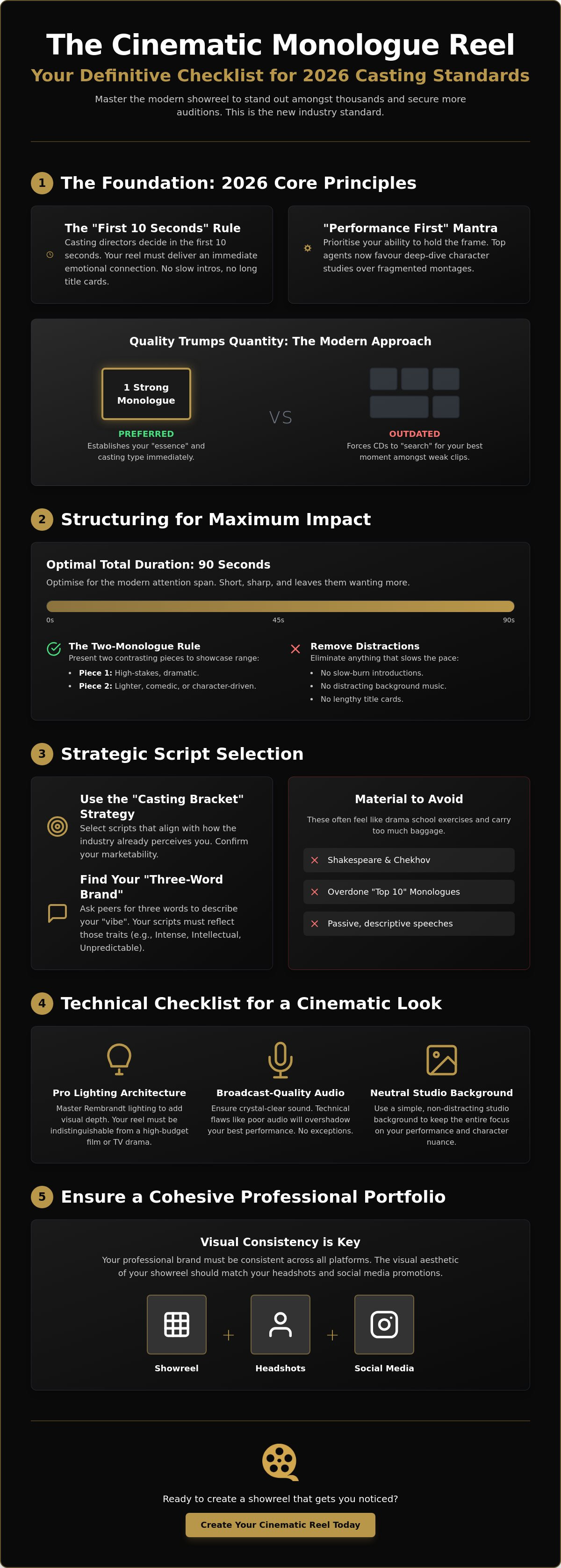
A cinematic monologue reel is far more than a simple recording of a script. It is a curated performance asset designed to function as a high-end calling card for the modern industry. In 2026, "Performance First" has become the absolute mantra for UK casting. When you consider what to include in a monologue showreel, you must prioritise your ability to hold the frame over everything else. We have seen a definitive shift amongst top-tier agents who now prefer deep-dive character studies over the fragmented, disjointed montages of the past. They want to see the nuance of your craft in high definition.
British casting directors now operate under a strict "First 10 Seconds" rule. If your reel opens with a long title card or a slow-burn transition, you have already lost your audience. You need to hit the ground running with an immediate emotional connection. This foundation ensures your talent is the primary focus from the very first frame, stripping away the distractions of low-budget student film sets or poor location sound that often plague amateur footage. It is about presenting yourself as a ready-to-work professional who understands the pace of contemporary television and film.
Why One Strong Monologue Trumps Five Weak Clips
The cognitive load on casting professionals is immense. They view hundreds of profiles daily, and their patience for "searching" for your best moment is non-existent. A single, focused performance establishes your "essence" much faster than a montage of five mediocre clips. By understanding the monologue as a self-contained narrative arc, you provide a clear, high-resolution look at your current ability and casting type. This strategic approach is explored further in our pillar piece on the power of cinematic monologue reels for actors in 2026. Quality is the only metric that truly matters in a crowded digital market.
The Spotlight Standard for 2026
Monologues are now fully accepted and often encouraged on professional platforms, provided the production value is indistinguishable from broadcast television. You must align your footage with the latest Spotlight showreel requirements to ensure your profile remains competitive. In 2026, the "Spotlight-ready" standard is defined by professional lighting architecture, broadcast-quality audio, and a performance that looks like it was lifted directly from a high-budget Netflix or BBC drama. If your footage looks like a self-tape, it stays in the self-tape category; if it looks like a film, you are viewed as a film actor.
Script Selection: What Material to Include for Maximum Range
Choosing your material is a tactical decision, not an emotional one. Forget the outdated advice to "just pick a speech you love." In 2026, script selection must follow a "Casting Bracket" strategy. This means you select scripts that align precisely with how agents and casting directors actually perceive you in the current market. If you are consistently called for high-stakes corporate roles, don't film a monologue about a 19th-century farmhand. Your footage must confirm your marketability immediately.
Avoid "The Overdone" at all costs. Skip Shakespeare, Chekhov, and any monologue found on the first page of a Google search. These pieces carry too much baggage and often feel like drama school exercises rather than professional film assets. Modern casting thrives on naturalism and conversational depth. When deciding what to include in a monologue showreel, look for contemporary writing where the character is active. They must want something specific from their silent partner. This creates an "active" performance that pulls the viewer in, rather than a "passive" one that just describes feelings. This focus on active objectives is a core part of any effective showreel checklist.
Finding Your "Signature" Character Type
Identify your unique selling point through the "Three-Word Brand" exercise. Ask three industry peers to describe your "vibe" in one word each. If the consensus is "Intense, Intellectual, Unpredictable," your scripts must reflect those traits. Your favourite monologue might be a brilliant piece of writing, but if it doesn't fit your brand, it's the wrong choice for your reel. Efficiency is key. You want the CD to see you and immediately know which "bucket" you fit into for their project.
Contrast and Variation: The Two-Monologue Rule
We recommend a lean, two-piece structure. One piece should be high-stakes and dramatic, whilst the second should be lighter and more conversational. This demonstrates "colour" and versatility without needing a five-minute montage. The transition between these pieces must be clean. You are showing two distinct facets of your personality. One might lean into your authority, whilst the other showcases your vulnerability. If you're struggling to find the right balance, collaborating with a professional monologue showreel service can help align your material with your career goals.
Technical Checklist: Achieving a Cinematic Studio Look
Visual quality is the silent gatekeeper of your professional reputation. If your footage looks like a standard self-tape, you are signalling that you aren't ready for high-end productions. When considering what to include in a monologue showreel, technical precision is just as vital as your performance. You need visual depth. A flat wall is the enemy of cinema. By creating separation between yourself and the background, you guide the casting director's focus exclusively to your eyes and expressions. This separation defines the professional standard amongst elite performers.
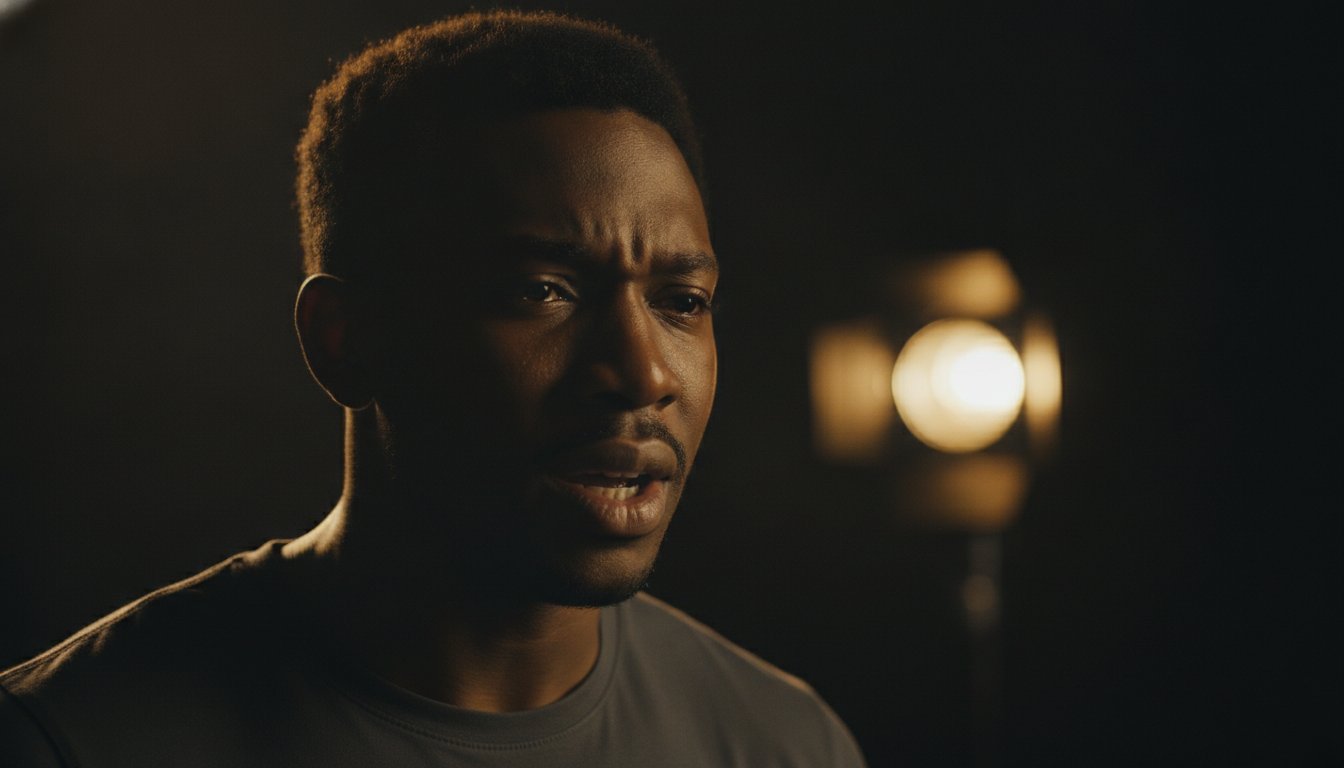
Lighting architecture defines the mood before you even speak. Use Rembrandt or three-point lighting to sculpt the face, creating shadows that add character and weight to your performance. This isn't about looking "pretty"; it's about looking professional. Sound integrity is equally non-negotiable. An echoey room or background hiss will kill a great performance in seconds. A dedicated boom or lavalier mic ensures your delivery is crisp, intimate, and free from distraction. Finally, master the eye-line secret. Look just off-camera to a specific spot whilst performing. This creates an intimate screen presence that feels like a real conversation, rather than a theatrical projection.
The Pitfalls of Home-Filmed Monologues
The "Amateur Signal" is real. Poor lighting and flat backgrounds distract casting directors from your acting. Echoey rooms and ambient noise are common issues in home setups. They pull the viewer out of the story you're trying to tell. This is why a professional actor showreel is an investment in your career perception. It moves you from the "beginner" pile to the "pro" shortlist by removing technical friction. High technical standards for what to include in a monologue showreel have evolved; a smartphone in a bedroom no longer cuts it.
Cinematic Editing and Post-Production
Professional editing is the final layer of your performance asset. Colour grading moves your footage beyond raw, digital-looking video into a filmic aesthetic that matches current TV and film standards. We use the "Invisible Cut" to shift between close-ups and mid-shots, enhancing the emotional impact without drawing attention to the edit itself. Avoid the temptation to add music beds. Music is a crutch. It masks your performance and can feel manipulative or dated to a seasoned CD. Your voice and your silence should be enough to hold the room.
Structuring Your Reel for Maximum Impact
In 2026, 90 seconds is the absolute threshold for a professional reel. Whilst legacy platforms might still suggest two or three minutes, the reality of modern casting is far more aggressive. Casting directors often make a decision within the first few frames. Deciding what to include in a monologue showreel requires a ruthless approach to editing. You must cut every frame that isn't a direct showcase of your current talent. Title cards should be minimal. Your name and headshot should appear for no more than one second; the performance must take centre stage immediately.
The "Face First" rule is your primary directive. Your face must be clearly visible and active within the first three seconds. No slow-burn pans. No shots of the back of your head. Start in the middle of a high-stakes moment where your eyes are communicating the story. When the performance ends, keep your contact information brief. A simple, clean slide with your name, agent, and Spotlight link is sufficient. Avoid cheesy transitions or rolling credits; they look amateur and waste valuable viewing time.
The "No-Go" List: What to Leave Out
Your reel is a highlight of your current ability, not a history of your career. Exclude montages of you walking through a park or looking moody in the rain. These clips provide zero information about your acting. Remove any footage that no longer reflects your current look. If you have changed your hair or aged significantly, that footage is a liability. Beware of "The Accent Trap" too. Only include an accent if you can maintain it flawlessly under the pressure of a live set. A shaky accent on a reel is an instant rejection amongst top-tier casting professionals.
Ordering Your Scenes Strategically
Lead with your most marketable look for the current UK TV landscape. If you are perfectly cast for gritty police procedurals or high-end period dramas, start there. Use your second monologue to surprise the viewer. If your first piece showcases a cold, authoritative colour, make your second piece vulnerable and warm. The emotional arc of a 90-second reel should move from a sharp, immediate hook to a resonant finish that leaves the viewer wanting more. To ensure your structure hits these marks, you can book a cinematic monologue showreel session that handles the pacing and precision for you.
The Professional Portfolio: Integrating Your Reel
A premium showreel is the centrepiece of your digital presence, but it cannot exist in a vacuum. Your portfolio must be a cohesive ecosystem where every asset reinforces the same professional message. Visual consistency is paramount. If your headshots suggest a "period drama" lead whilst your reel presents a "gritty detective," you create confusion for casting directors. When deciding what to include in a monologue showreel, you must also consider how that footage aligns with your current casting type and physical appearance. A unified brand makes it easier for agents to pitch you for high-level projects.
Stagnation is the enemy of a successful acting career. You should refresh your monologue every 12 to 18 months to reflect your natural ageing and evolving range. An outdated reel suggests a lack of momentum. By keeping your assets sharp and current, you signal to the industry that you are an evolving professional. This proactive approach ensures your Spotlight profile remains competitive in a crowded market.
Headshot Add-ons: Completing the Look
We offer headshot sessions alongside our filming to ensure total brand continuity. A "Standard" headshot gets you in the door; a "Character Look" headshot confirms you belong in the room for a specific role. Re-energise your relationship with your agent by providing a fresh, unified portfolio. When your images and your footage look like they belong to the same high-end production, your perceived value as a professional increases instantly. It removes the guesswork for the casting team.
Social Media Promo Content for Actors
Ready to elevate your career with a reel that meets the highest production standards? Book your cinematic monologue session today and secure your place in the 2026 casting landscape.
Secure Your Future in the 2026 Casting Landscape
The 2026 industry standard is clear. Quality and brevity define success. By prioritising a 90-second runtime and using the "Casting Bracket" strategy, you ensure your performance aligns with market demand. You now understand that mastering what to include in a monologue showreel is about removing technical friction and leading with your most marketable emotional hook. A flat self-tape is no longer enough to compete at the highest level.
We provide professional studio-based filming in a controlled, high-end environment to help you achieve this standard. Our packages include cinematic post-production and colour grading to give your work a true filmic aesthetic. You can also choose add-on options for professional headshots and social media promo clips to complete your portfolio. This comprehensive approach ensures your brand is consistent across every platform.
Elevate your career with a Cinematic Monologue Showreel
Your talent deserves a platform that matches your ambition. Take control of your professional narrative and give casting directors a reason to stop scrolling. Success is the direct result of high-quality preparation. We are ready to help you make your mark.
Frequently Asked Questions
How long should a monologue showreel be in 2026?
Your reel should ideally sit between 60 and 90 seconds. Casting directors make decisions with clinical speed; anything longer than two minutes risks losing their attention entirely. Focus on high-impact moments rather than duration. Efficiency is your greatest asset in a competitive market.
Can I include a monologue if I already have professional TV credits?
Yes, especially if your current credits don't reflect your "Signature" character type or your current physical look. A cinematic monologue allows you to take control of your casting bracket. It is a tactical tool used to showcase a specific range that your previous broadcast work might have missed.
Should I write my own monologue or use an existing script?
Stick to established contemporary scripts unless you are a professional writer. When deciding what to include in a monologue showreel, the quality of the writing must match your performance. Weak dialogue in an original piece can distract a viewer from your acting ability; use proven material to stay safe.
What is the best background for a cinematic monologue reel?
A neutral, studio-grade background with depth is the professional standard. Avoid flat white walls or cluttered domestic rooms. A professional studio uses lighting to create separation between you and the backdrop, ensuring the focus remains exclusively on your eyes and facial expressions.
Do I need to hire a professional studio for my monologue reel?
To meet 2026 standards, professional production is essential. The gap between a home self-tape and a cinematic studio reel is now a major factor in how agents perceive your value. High-end sound and lighting architecture are non-negotiable for anyone serious about landing leading roles.
Is it better to have one long monologue or two short ones?
Two short, contrasting pieces are significantly more effective. This "Two-Monologue Rule" allows you to demonstrate versatility, such as showing both authority and vulnerability, within the same 90-second window. It provides a more complete picture of your talent than a single, sustained scene.
What should I wear for my monologue filming session?
Wear solid, mid-tone colours that complement your skin tone and suggest a character type without being a full costume. Avoid busy patterns, stripes, or large logos. These elements create visual "noise" on camera and pull the viewer's focus away from your performance.
How often should I update my actor showreel?
You should refresh your footage every 12 to 18 months. This ensures your reel accurately reflects your current age, hair colour, and physical appearance. Regular updates also show agents and casting directors that you are proactive and consistently developing your craft.


