

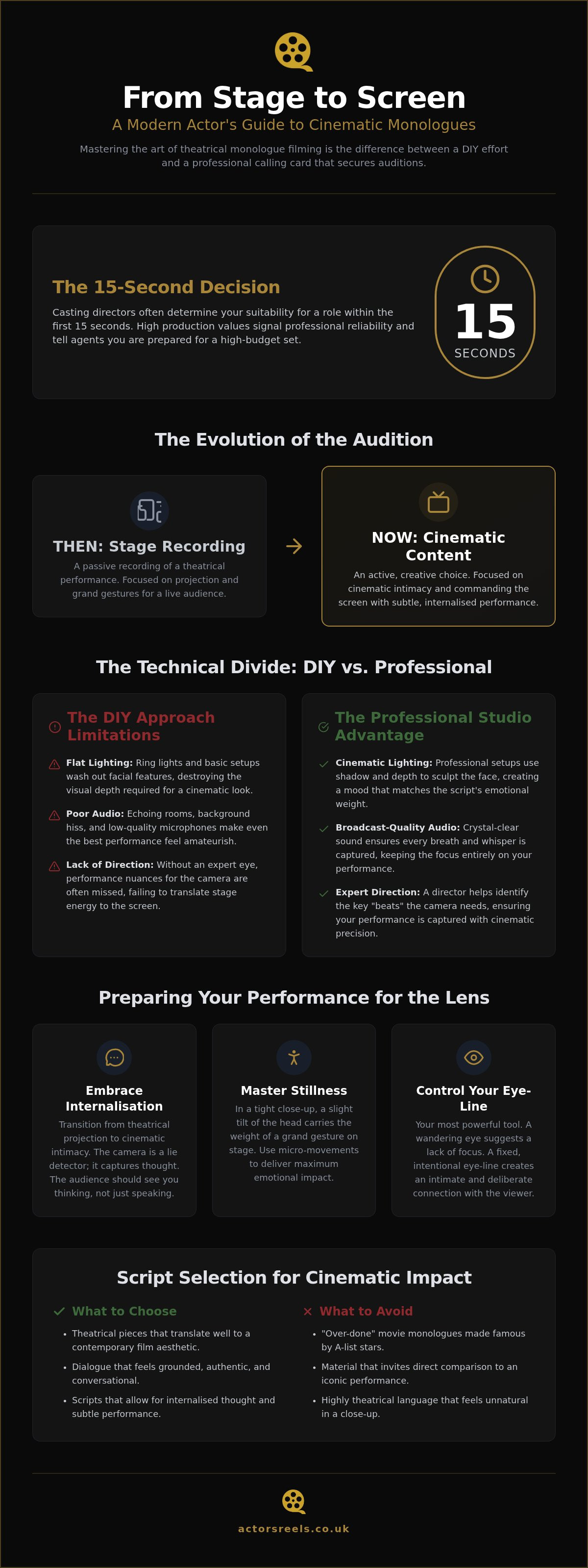
Casting directors often decide your suitability for a role within the first 15 seconds of watching your reel. If your footage looks like a grainy rehearsal recording, you are likely being overlooked before you even speak. A theatrical monologue only succeeds on screen when it is treated as a cinematic event, not a recorded stage play. Mastering the art of theatrical monologue filming is the difference between a DIY effort and a professional calling card that secures the audition.
You already know that your stage performance is powerful, but translating that energy to a tight frame is a distinct challenge. It is common to feel that your screen work looks too "big" or that poor audio quality is sabotaging your best takes. We will show you how to bridge this gap, turning raw talent into high-end screen content that looks like a big-budget production. We will explore the technical precision of studio lighting, the necessity of crisp audio, and the performance adjustments required to ensure your Spotlight profile stands out to the industry’s top gatekeepers.
Key Takeaways
- Understand why modern casting directors prioritise "screen-ready" content over traditional stage recordings.
- Learn to select scripts that allow for internalised thought and subtle, cinematic performance adjustments.
- Discover how professional studio lighting and broadcast-quality audio transform a standard take into a high-end film scene.
- Master the specific techniques of theatrical monologue filming to build a Spotlight profile that commands respect.
- Transition from amateur DIY recordings to polished, cinematic showreels that reflect your true professional standard.
The Evolution of Theatrical Monologue Filming: Stage vs Screen
Theatrical monologue filming is no longer just about recording a performance; it is about creating a cinematic moment. In 2026, casting directors prioritise content that is "screen-ready." They are not looking for a simple record of what you did on stage. They want to see how you command the screen. Capturing a play is a passive act. Producing a cinematic monologue is an active, creative choice. This shift requires a total move from theatrical projection to cinematic intimacy. High production values signal professional reliability. They tell agents and casting houses that you are prepared for the rigours of a high-budget set.
To master this craft, you must first understand the foundational purpose of the medium. When considering what is a monologue in a modern audition context, it is a window into your range and professional standard. If that window is clouded by poor technical execution, your performance is lost. Professional theatrical monologue filming removes the barriers between your talent and the viewer.
The Limitations of the DIY Approach
Phone cameras and ring lights often fail to capture the nuance of a professional performance. Ring lights create "flat" lighting that washes out facial features. This destroys the visual depth needed for a truly cinematic look. Poor acoustics are equally damaging. Echoing audio or background hiss distracts from your delivery; it makes even the best performance feel amateurish. Professional studio environments eliminate these hurdles, ensuring the focus remains entirely on your craft.
Meeting Modern Spotlight Standards
Your digital presence is your primary business card. Adhering to specific Spotlight showreel standards is non-negotiable for the working actor. Industry trends in 2026 show a clear preference for single, high-impact scenes over fragmented montages. A polished cinematic monologue offers clarity. It gives casting houses a definitive look at your casting type without the distraction of low-quality clips or student film footage. In a professional reel, quality always beats quantity.
Preparing Your Performance for the Cinematic Lens
The camera's a lie detector. It captures every flicker of doubt or over-extension. When transitioning to theatrical monologue filming, your first task is to abandon the "back row of the gallery" energy. Theatre requires projection; film requires internalisation. You must choose a script that allows for internalised thought. The audience should see you thinking, not just speaking. This mental activity is what creates a compelling screen presence.
Eye-line is your most powerful tool. A wandering eye suggests a lack of focus. A fixed, intentional eye-line creates a connection with the viewer that feels both intimate and deliberate. Stillness is equally vital. In a tight close-up, a slight tilt of the head carries the weight of a grand gesture on stage. Rehearse for the frame. Use micro-movements to deliver maximum emotional impact. It's how you translate the monologue as performance into a cinematic event.
Script Selection for Cinematic Impact
Don't fall into the trap of "over-done" movie monologues. If you perform a scene made famous by an A-list star, the casting director will inevitably compare you to them. Instead, find theatrical pieces that translate well to a contemporary film aesthetic. Look for dialogue that feels grounded and conversational. This allows the production quality to shine whilst keeping the focus on your authenticity.
The Technical Rehearsal
Working with a director is essential to identify the "beats" that the camera needs to capture. You've got to understand how different shot sizes affect your delivery. A wide shot might allow for more physical movement. A close-up demands total facial control. Mastering these nuances is why many actors choose to film their monologues in a studio rather than at home. It ensures your performance is captured with the precision that professional theatrical monologue filming provides.
The Professional Studio Advantage: Lighting, Sound, and Direction
Cinematic lighting is more than just visibility. It's about atmosphere. We use shadow and depth to sculpt the face, creating a mood that matches the script's emotional weight. This is where theatrical monologue filming transcends the stage. Professional colour grading then polishes the footage in post-production, giving it that sought-after "Netflix look" that signals high-end production. In a world where 4K resolution is the 2026 industry benchmark, your visual standard must be impeccable.
Audio is the most overlooked element of any showreel. Casting directors won't tolerate poor sound, even if the acting is superb. Broadcast-quality audio ensures every breath and whisper is heard with total clarity. It removes the amateurish echo of a spare bedroom or the hiss of a phone microphone. An external director adds the final layer of polish. They push your performance beyond your comfort zone, ensuring every beat lands with precision and purpose.
Creating a Controlled Environment
A studio isn't just about the gear. It's about control. We eliminate background sirens, humming fridges, and visual distractions. This allows for total immersion in the character. The psychological shift is significant. Stepping onto a professional set focuses the mind. It signals to your brain that this is a high-stakes moment, often resulting in a more grounded, intense performance than you could ever achieve in a DIY setup.
Investing in Your Career
View your reel as a business investment. When you weigh up the cost of professional showreel production against the potential for higher-tier auditions, the value is clear. High-end theatrical monologue filming serves as the cornerstone of a professional acting portfolio. It isn't a luxury. It's a necessity for actors ready to compete at the national level. A polished, cinematic reel creates a sense of momentum and efficiency that commands respect from the industry's top gatekeepers.
Command the Screen with Cinematic Precision
Your showreel is the primary gatekeeper for your career. It must demonstrate that you understand the specific nuance of the camera. You've seen how theatrical monologue filming has evolved into a cinematic discipline. It requires a total shift from stage projection to screen intimacy, prioritising internalised thought and subtle eye-lines. By investing in broadcast-quality sound and professional studio lighting, you signal your readiness for the industry's highest standards. The difference between a standard recording and a professional production is often the difference between being ignored and being called into the room.
Don't let an amateur recording hold you back from the roles you deserve. Book your cinematic monologue session with Actors Reels today. Our cinematic studio-based production includes tailored direction and high-end post-production to give your reel a definitive edge. We handle the technical precision so you can focus entirely on your craft.
The industry is moving fast. Ensure your digital presence moves with it. Your talent deserves to be seen through a professional lens. Take the next step and build a portfolio that reflects your true potential. We are ready to help you stand out.
Frequently Asked Questions
Can I use a theatrical monologue for a film showreel?
Yes, you can use a theatrical monologue if you adapt the performance for the lens. The script must allow for internalised thought rather than the broad projection required for a live audience. When you opt for professional theatrical monologue filming, the production house shifts the focus to cinematic intimacy. This makes the material work for screen showreels by highlighting your presence whilst maintaining the dramatic depth of the text.
How long should a filmed monologue be for Spotlight?
Your filmed monologue should ideally last between 60 and 120 seconds. Industry standards for 2026 suggest that casting directors often make a decision within the first 15 to 30 seconds. Keeping it concise ensures you hold their attention throughout. Avoid anything longer than two minutes. Brevity demonstrates professional discipline and respects the viewer's time. It's about delivering maximum impact in a streamlined format that fits the modern digital landscape.
Do I need a scene partner for my monologue filming?
No, you don't need a scene partner for this specific format. The monologue is a solo showcase designed to highlight your individual range and ability to command the screen. During theatrical monologue filming, we establish an off-camera eye-line to create the presence of another character. This keeps the camera's focus entirely on your facial nuances and internal journey. It's a powerful way to demonstrate that you can carry a scene alone.
What should I wear for my cinematic monologue recording?
Choose simple, solid colours that suggest your character's essence without becoming a full costume. Avoid busy patterns, stripes, or large logos. These elements often "strobe" on camera or distract from your performance. Earth tones or muted shades usually work best under professional studio lights. The aim is to look professional and castable. You want the casting director to focus on your eyes and your behaviour, not your outfit.


