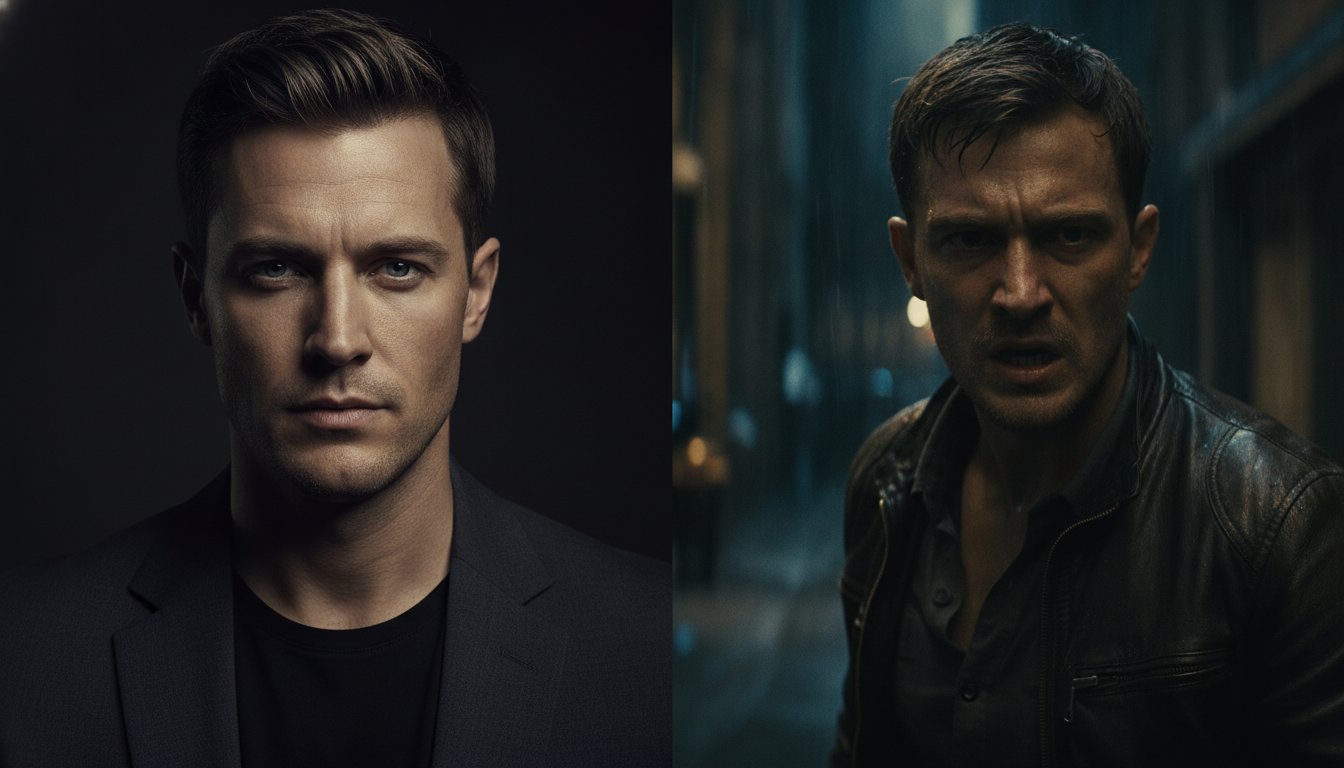

Your acting talent is irrelevant if the technical quality of your reel switches a casting director off in twenty seconds. Choosing a professional monologue recording over a grainy self-tape is often the difference between a high-end invitation and a silent rejection. If your footage suffers from inconsistent lighting or distracting background noise, your performance remains effectively invisible. You have likely felt the anxiety of a technical glitch overshadowing a brilliant delivery, leaving you lost amongst a sea of competing profiles.
You deserve a portfolio that reflects your true standard of work. This process isn't just about capturing a scene; it's about creating a cinematic proof-of-concept that demonstrates you belong on a professional film set. High-quality production values signal that you are ready for the rigours of a major production. It is the most direct way to bridge the gap between being an aspiring talent and a working professional with a brand you can trust.
In this article, you will discover why a studio-produced reel is the decisive factor in securing high-end auditions. We compare the technical precision of professional environments whilst examining the limitations of home self-tapes, giving you a clear roadmap to a reel that looks and feels like a high-end film.
Key Takeaways
- High-end lighting and sound acoustics are the true differentiators between a professional monologue recording and a standard home self-tape.
- Understand the 2026 industry shift that favours sustained single performances over traditional montages to define your casting type with precision.
- Learn the essential criteria for selecting scripts that translate effectively to a cinematic medium and showcase your professional range.
- Discover how studio production values act as a cinematic proof-of-concept to help you secure invitations for high-end auditions.
- Master the process of working with a professional crew to ensure your performance remains the central focus of every frame.
Professional Monologue Recording vs. Home Self-Taping
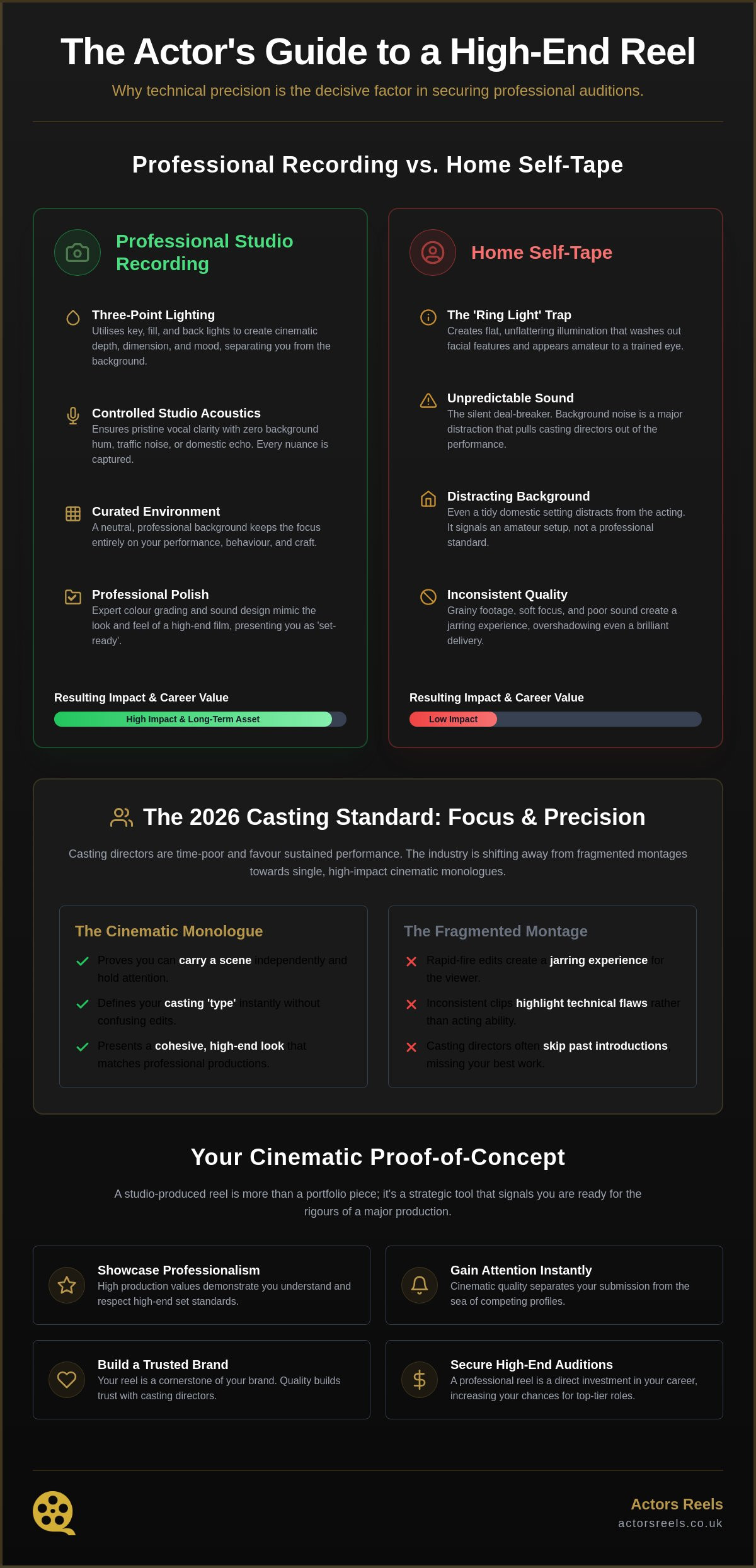
A 4K camera on a smartphone is a standard tool, but it doesn't guarantee a professional monologue recording. Resolution is only half the battle. True cinematic quality comes from the deliberate interplay of light, shadow, and controlled acoustics. Most actors understand what a monologue is in a theatrical context, but translating that performance to a screen requires technical precision that home environments cannot replicate.
Sound quality is the silent deal-breaker. A casting director might forgive a slightly soft image, but they rarely tolerate background hum, traffic noise, or domestic echo. Studio acoustics ensure every nuance of your vocal performance is captured with absolute clarity. This technical edge is enhanced by the guidance of a professional director. Having external eyes on your performance whilst filming ensures you aren't just hitting your marks; you are delivering a take that actually works for the lens. Post-production then adds the final polish, using colour grading and sound design to mimic the look and feel of a real film set.
The 'Ring Light' Trap: Why Home Setups Often Fall Short
Ring lights create flat, unflattering illumination that washes out facial features. Professional studio production utilises three-point lighting systems to create depth and dimension. This cinematic aesthetic separates you from the amateur crowd instantly. A domestic background, no matter how tidy, distracts from the performance. A curated studio environment keeps the focus entirely on your behaviour and craft.
Investment vs. Cost: Calculating the Value of Your Reel
A high-quality cinematic quality showreel reduces the friction for casting directors. It presents you as a plug-and-play professional who understands high-end set standards. While a home tape might cost nothing today, its shelf life is short and its impact is limited. A professional recording remains a cornerstone of your branding for years, offering a superior return on your career advancement.
Choosing Your Format: Single Monologue vs. Montage
Casting directors in 2026 are time-poor and precision-focused. They favour sustained performance over the traditional 'best bits' montage. They no longer want a ninety-second reel that jumps between five different genres; they want to see you live in a moment. A single, high-impact professional monologue recording offers this clarity. It defines your 'type' instantly without the distraction of rapid-fire edits or varying audio levels. It proves you can carry a scene independently.
Mixing professional film clips with home self-tapes creates a jarring experience for the viewer. This inconsistency pulls the casting director out of the story. It highlights technical flaws rather than acting ability. This is why a cinematic monologue reel has become the modern standard for professional profiles. It provides a cohesive, high-end look that matches the quality of the projects you are targeting. It signals that you understand the expectations of a high-budget set.
The Case for the Solo Monologue
Solo monologues eliminate the 'scene partner' problem. You aren't reliant on a flat reader or a distracting co-star. The focus remains entirely on your performance and your behaviour. You gain total control over the material. You can select a script that specifically targets your casting strengths. While a comprehensive self-taping guide can help with basic home framing, it cannot replace the intentionality of a studio-produced solo piece.
The Pitfalls of the Fragmented Montage
Casting directors often fast-forward through montage introductions. They want to get to the acting. If your reel starts with a series of stills or low-quality student film clips, you've already lost their attention. These fragmented pieces often lack the technical polish required for a professional portfolio. Poor sound or muddy lighting in a student project can actively harm your brand. If you want to stand out, you need to record a cinematic monologue that prioritises your performance over flashy edits.
The Professional Recording Process: From Script to Spotlight
The journey to a high-end reel begins long before the camera rolls. Success in a professional monologue recording depends on meticulous preparation and an understanding of the cinematic medium. You aren't just performing a scene; you're creating a digital calling card that must meet the rigorous standards of modern casting directors. This requires a shift in mindset from the stage to the screen.
In the studio, you work alongside a professional crew dedicated to capturing your best take. This environment allows you to focus entirely on your craft whilst the technical team manages the lighting, frame composition, and audio levels. Once the filming wraps, the post-production phase begins. Professional editing, cinematic colour grading, and precise sound mixing are essential to ensure the final product looks like a genuine film excerpt. Finally, your reel must be delivered in the correct format to meet Spotlight showreel requirements for seamless profile integration.
Selecting Cinematic Material
Avoid 'stagey' monologues that rely on large gestures or projected voices. These rarely translate well to a professional monologue recording. Instead, choose material that allows for subtle screen acting techniques. Focus on internal thought processes and the nuances of the eyes. Casting directors want to see you thinking, not just speaking. The camera captures every flicker of emotion; trust that the lens will find the truth in your performance.
Optimising Your Digital Presence
Your cinematic reel shouldn't exist in a vacuum. Use social media promo clips to drive traffic to your full showreel on professional platforms. These short, high-impact snippets are perfect for grabbing attention in a crowded digital landscape. There is also a powerful synergy between professional headshots and cinematic video content. When your visual branding is consistent across all mediums, it builds a narrative of professional authority that agents and casting directors cannot ignore.
Elevate Your Professional Casting Potential
The technical divide between a home self-tape and a studio production is the difference between being overlooked and being cast. You now understand that a single, high-impact performance defines your casting type more effectively than any fragmented montage. By prioritising cinematic lighting and studio-grade acoustics, you remove the technical friction that stalls a casting director's interest. A professional monologue recording is the definitive tool for actors who are serious about high-end screen work.
Your reel must be a cinematic proof-of-concept. It should demonstrate that you belong on a professional set. Actors Reels provides a national UK service dedicated to this standard. We combine cinematic studio production with expert post-production and colour grading to ensure your digital presence is flawless. Stop settling for "good enough". Present the version of yourself that commands attention.
Ready to transform your portfolio? Book your cinematic monologue showreel with Actors Reels today and step into the spotlight with absolute confidence. Your next major audition starts here.
Frequently Asked Questions
Is a professional monologue recording better than a self-tape for Spotlight?
A professional monologue recording is superior to a self-tape for Spotlight because it guarantees technical compliance and cinematic impact. Whilst smartphones are capable, they lack the controlled lighting and acoustic depth required for high-end profiles. A studio-produced piece ensures you meet the 2026 Spotlight upload standards with a file that looks like a professional film excerpt rather than a domestic audition.
How long should a professional monologue recording be for a showreel?
Your recording should ideally last between 60 and 90 seconds. Industry data suggests that many casting directors make a decision within the first 10 to 20 seconds of viewing your footage. A concise, high-impact performance is more effective than a long, meandering scene. It respects the viewer's time whilst demonstrating your ability to hold a moment with intensity and focus.
Can I use a professional monologue if I don't have any professional film credits?
You can and should use a professional monologue recording if you lack screen credits. It serves as a cinematic proof-of-concept that demonstrates you are "set-ready" for high-end productions. This format allows you to showcase your specific casting type and acting ability in a controlled, professional environment. It bridges the gap between your training and the professional industry by providing high-quality footage immediately.
What should I wear for my professional monologue recording session?
Choose solid colours that complement your skin tone and contrast with the studio background. Avoid busy patterns, stripes, or visible logos that might distract the viewer or cause technical "strobing" on camera. Your outfit should hint at the character's world without becoming a literal or distracting costume. This approach keeps the focus entirely on your performance and your facial expressions.
Do I need a scene partner for a professional studio monologue?
You don't need a scene partner for a studio monologue. The format is designed to highlight your individual talent and your ability to engage directly with the lens or a specific off-camera point. In a professional studio, the director and crew provide the necessary support to ensure your delivery is grounded and technically precise. This eliminates the risk of a distracting reader or an unbalanced scene.
How much does a professional monologue recording typically cost in the UK?
Industry rates for recording services in the UK vary based on the facility's location and the level of post-production included. High-end studios in major cities typically charge more for their technical expertise and cinematic equipment. When evaluating costs, consider the value of the final asset as a long-term investment in your career branding rather than a one-off expense. Quality production pays for itself through better audition opportunities.