
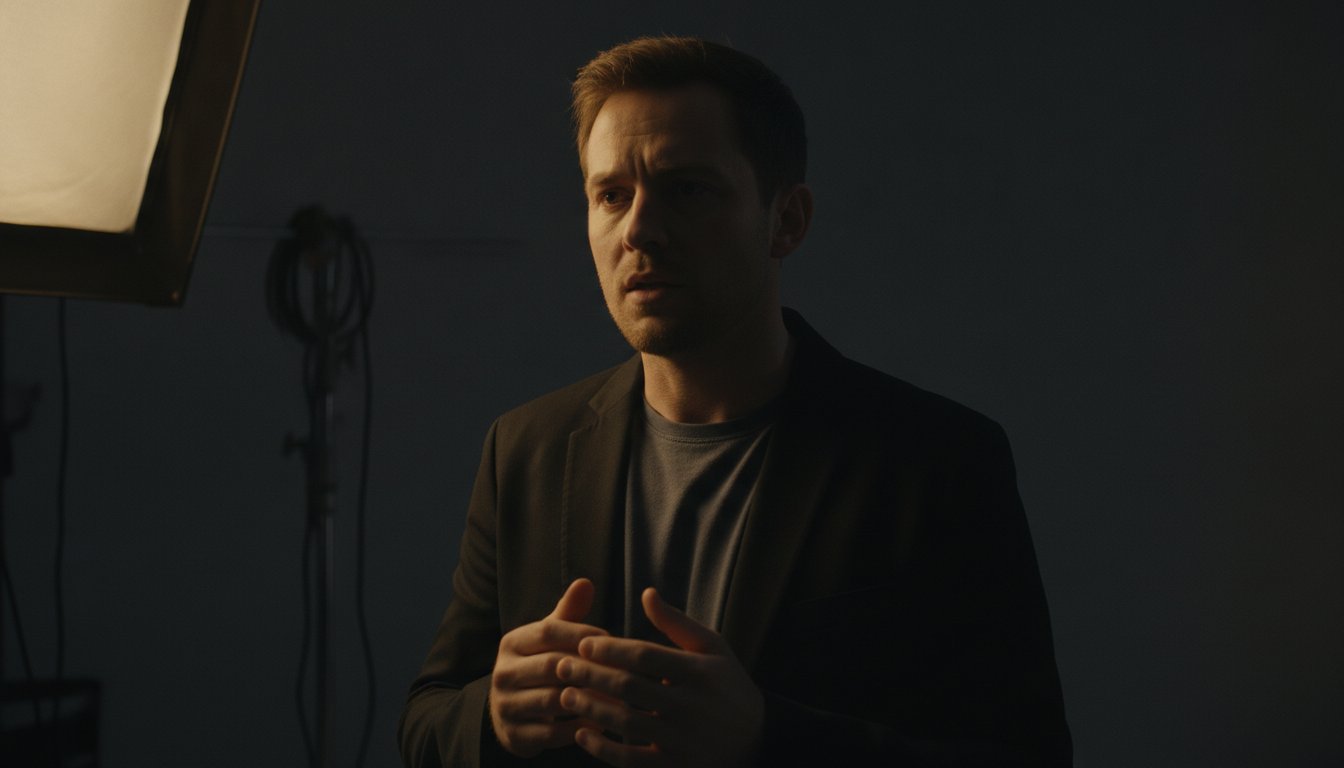
Your expensive, three-minute location showreel is likely being skipped before you even speak your first line. It is a harsh reality of the 2026 digital casting landscape. Speed and clarity are everything. Understanding why casting directors prefer monologue reels is the first step to ensuring your footage actually gets watched to the end. You have likely felt the exhaustion of chasing unreliable scene partners or the anxiety of watching your talent get lost in a low-quality, fragmented montage.
We know you want a portfolio that commands respect without the excessive costs of location filming. This article explores how high-end, cinematic monologues can secure your next big audition. You will learn why the industry has pivoted toward short-form excellence and how a focused, professional performance is now the primary tool for your career advancement. We will show you how to deliver exactly what casting rooms are looking for in the modern age.
Key Takeaways
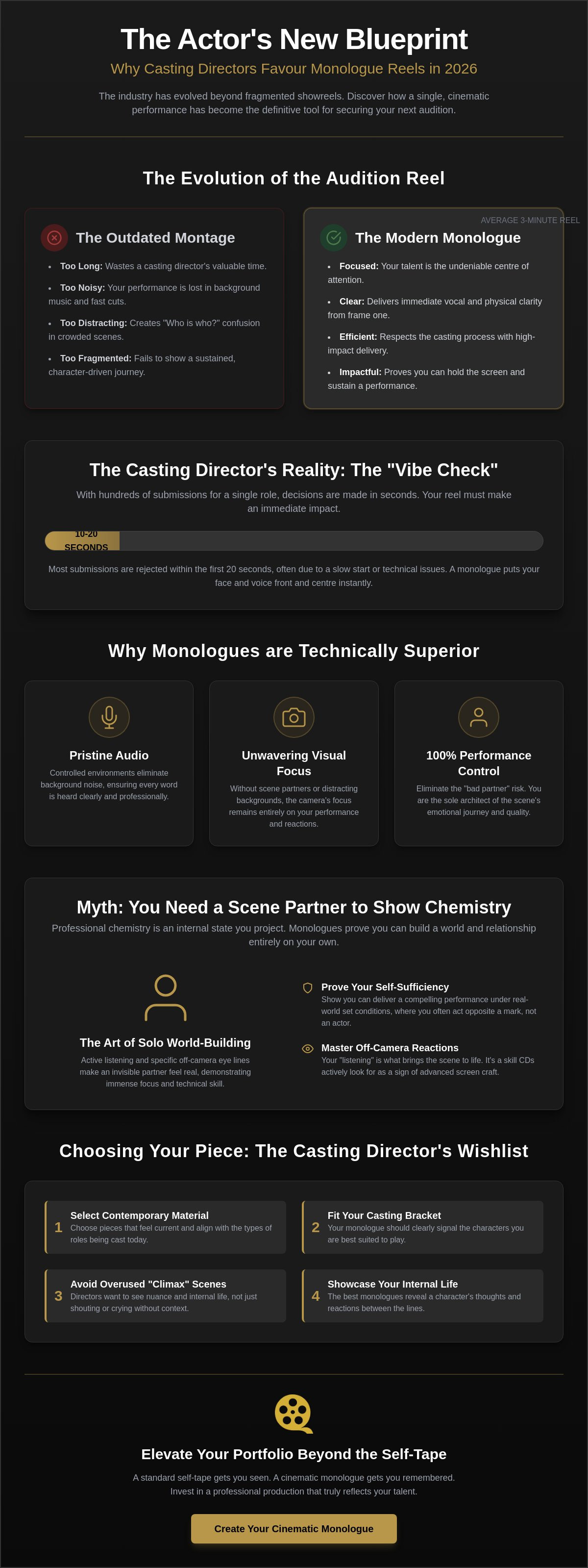
- Adapt to the "vibe check" era by replacing dated three-minute montages with high-impact, focused performances that respect a director's time.
- Discover why casting directors prefer monologue reels for their technical precision, offering cleaner sound and sharper visual focus than chaotic location shoots.
- Master the art of solo world-building to prove you can hold the screen and project professional chemistry without relying on a scene partner.
- Learn how to select contemporary material that fits your casting bracket perfectly whilst avoiding the "climax" scenes that often mask genuine acting.
- Elevate your portfolio by understanding the critical difference between a standard home self-tape and a cinematic monologue production.
The Evolution of the Actor’s Reel: Why Variety is Dying
The traditional showreel is a relic of the past. It is too long, too noisy, and too distracting for the modern industry. In 2026, the industry has moved toward the "Single-Shot Impact." A monologue reel is a focused, cinematic performance of a single piece. It strips away the clutter. It places your talent front and centre. Understanding what is a monologue in a professional context is essential; it is a demonstration of your internal life, not just a speech. Casting directors (CDs) no longer sit through two-minute montages. They perform "vibe checks." They decide your suitability in seconds. This efficiency is a primary reason why casting directors prefer monologue reels. They provide an immediate answer to a single, critical question: can this person act?
The Death of the Fragmented Montage
A three-second clip of you walking in the background of a television programme is not a reel. It is a distraction. CDs feel immense frustration whilst trying to find your voice amongst the noise of background music and fast cuts. If they have to guess which person you are in a crowded scene, they have already moved on. A single monologue provides immediate vocal and physical clarity. It proves you can hold a frame. It demonstrates that you can sustain a character journey without the crutch of expensive location sets or multiple scene partners. In the UK market, the montage is now seen as an outdated attempt to look busy rather than look talented.
Speed is the New Currency in Casting
Casting is a high-speed digital environment. For many professional roles, CDs receive hundreds of applications within a 48-hour period. Research indicates that most self-taped submissions are rejected within the first 10 to 20 seconds. This is rarely due to a lack of talent; it is usually due to technical friction or a slow start. A monologue reel removes the "who is who?" confusion instantly. It delivers your face and your voice from the first frame. There is a psychological benefit to this. By starting with your performance immediately, you respect the professional's time. You provide a streamlined solution to their casting need. This direct approach is now the baseline expectation for any serious Spotlight profile in 2026.
Myth: You Need a Scene Partner to Show Professional Chemistry
Many actors believe they need a scene partner to prove they can "connect." This is a fundamental misunderstanding of screen craft. Professional chemistry is not a shared commodity; it is an internal state that you project. Performing a solo piece means you are responsible for creating the entire world. You must imagine the other person's breath, their silence, and their provocation. This level of imaginative work is precisely why casting directors prefer monologue reels in a competitive market. It demonstrates a self-sufficiency that is vital on a professional set. You aren't just reciting lines; you are manifesting a relationship through your reactions alone. This skill proves you are ready for the technical demands of a high-end production.
The technical reality of modern filming often involves acting to a piece of tape next to a lens. You rarely have your co-star giving a full performance during your close-up. By mastering the solo reel, you prove you can deliver under these standard industry conditions. It shows you don't need a crutch to find the emotional truth of a scene. You become the focus. The distractions of another actor's choices are removed.
The Art of the Off-Camera Reaction
Active listening is the cornerstone of great screen acting. In a monologue, your "listening" is what makes the invisible partner real for the viewer. You aren't just waiting to speak; you are reacting to what isn't being said. Casting directors value this ability to hold a frame whilst alone because it displays immense focus. Using specific eye lines is essential here. You shouldn't look directly into the lens, but rather just off-camera, suggesting a complex relationship through your gaze. If you are unsure which material best showcases this skill, learning how to choose a monologue that requires high-stakes interaction is a great place to start. Your ability to "see" the other person is what sells the performance.
Removing the "Bad Partner" Risk
Working with a partner in a showreel scene is a gamble. If they overact, they pull focus. If they under-deliver, they flatten your performance. A monologue reel gives you 100% control over the quality of the output. You are the sole architect of the emotional transitions. This ensures the CD’s attention remains locked on your eyes and your choices, not the technical flaws of a friend helping you out. For those looking to capture this level of precision, exploring cinematic monologue showreels can provide the professional edge you need. You eliminate the variables and keep the spotlight where it belongs: on your talent. It is about presenting the most polished, undeniable version of your craft.
The Technical Advantage: Why CDs Favour Monologue Clarity
Technical quality is no longer a luxury in the digital casting era. It is a baseline expectation. A high-end monologue reel signals that you understand the professional standards of a modern film set. When a production house prepares to spend thousands of pounds per minute on filming, they need to know you can handle the scrutiny of a 4K lens. This technical reassurance is a major reason why casting directors prefer monologue reels over cluttered, low-resolution montages. It allows them to evaluate your skin texture, your vocal control, and your eye movement without the distraction of poor production values. You aren't just selling a performance; you are selling a professional-grade product.
Audio Clarity as a Casting Requirement
Bad audio is the fastest way to end your chances of an audition. Research shows that technical mistakes, rather than a lack of talent, lead to the majority of self-tape rejections within the first 20 seconds. If a casting director has to strain to hear your dialogue over background hiss or room echo, they will stop watching. Studio-controlled acoustics allow for immense vocal nuance. You can whisper without losing clarity. You can shout without distorting the track. Vocal range requires professional microphone placement to capture the subtle frequency shifts of a nuanced screen performance. This level of sonic detail is impossible to achieve in a standard living room setup.
Cinematic Lighting and Casting Type
Lighting is the primary tool for defining your casting "brand." It organises the viewer’s perception of your energy before you even speak. A gritty, high-contrast setup positions you for a police procedural or a psychological thriller. Conversely, soft, warm lighting suggests a protagonist in a romantic drama or a high-end commercial. Professional colour grading further separates a monologue reel from a standard self-tape. It gives the footage a "finished" look that mirrors what a director sees in the edit suite. Crucially, professional setups include "eye lights." These small reflections in the pupil are vital. They capture your internal thought process and make your performance feel alive and present on screen.
By investing in this level of technical precision, you remove the "amateur" tag from your profile. You show that you are ready for the technical demands of a high-end TV or film set. It is about positioning yourself at the correct price point for the industry. When the technicals are perfect, the only thing left for the CD to judge is your undeniable talent.
Choosing Your Piece: What Casting Professionals Actually Look For
Selection is as important as the performance itself. It is a strategic exercise in market positioning. Choosing the wrong material can alienate a viewer before you even speak. This focused approach is precisely why casting directors prefer monologue reels; they offer a concentrated look at your specific casting bracket without the noise of a multi-actor scene. To succeed in the 2026 market, you must follow a precise selection process:
- Step 1: Select a contemporary piece that fits your current casting bracket. If you are typically cast as a young professional, don't choose a gritty period piece.
- Step 2: Avoid "climax" scenes. CDs want to see the journey and the internal struggle, not just the screaming at the end of a conflict.
- Step 3: Keep it under 90 seconds. Brevity is a sign of professional confidence. It shows you know how to deliver impact quickly.
- Step 4: Ensure the writing allows for at least three distinct emotional shifts. A flat, one-note performance is a forgotten performance.
The Contemporary Edge
Current casting trends in the UK favour naturalism over theatricality. 2026 casting calls frequently request "natural, conversational" delivery. You should avoid Shakespeare or classical Greek texts unless specifically requested for a period role. Look for scripts that sound like real speech, not "written" dialogue. Avoid the "overdone" lists found on internet forums. If a casting director has heard a speech a hundred times, they aren't watching your acting; they are comparing you to the last fifty people who performed it. Fresh, contemporary material makes you stand out as a modern professional.
The "Arc" in 60 Seconds
You don't need five minutes to show an emotional journey. A well-structured monologue shows a clear change in objective within the first minute. An internal shift is always more impressive than a loud, physical outburst. It shows control. It shows thought. The "moment before" is the engine that drives your scene; you must arrive in the frame already living the circumstances of the character. This immediate engagement is what hooks a CD and keeps them watching until the final frame.
Ready to put these strategies into practice? Book your cinematic monologue showreel and let us help you select the perfect material for your next big audition.
Elevating the Solo Performance: The Cinematic Monologue Standard
Do not confuse a standard self-tape with a cinematic monologue. A self-tape is a rough draft; a response to a specific, fleeting casting call. A monologue reel is a permanent marketing asset. It is the final cut. This distinction is at the heart of why casting directors prefer monologue reels when reviewing new talent. They want to see you under professional conditions. A bedroom wall and a ring light can only take you so far. To be considered for high-budget UK drama or international feature films, your marketing materials must match the quality of the production. You are not just auditioning for a part; you are auditioning for a spot on a professional call sheet.
Studio-based monologues provide a neutral yet cinematic canvas. They allow your performance to breathe without the visual clutter of a domestic setting. This clean environment focuses the viewer’s attention entirely on your emotional transitions. It provides a versatile asset that fits into any casting director's workflow. It is clean. It is precise. It is undeniable.
The Credibility of Professional Production
High-end production value acts as a psychological shortcut for casting professionals. It signals that you are an actor who invests in their career. It suggests you are comfortable on a professional set. When a CD sees cinematic lighting and hears studio-grade audio, they can immediately "see" you in their project. You remove the imaginative hurdle. You are no longer an aspiring performer; you are a professional colleague. This level of aesthetic polish creates a sense of trust and reliability before you even speak your first line. It defines your "price point" in the industry. Professional production isn't a luxury; it is a necessity for career advancement.
Your Next Steps: Filming the Perfect Reel
Preparation is the key to a successful studio session. You should arrive off-book and ready to take direction. Unlike a DIY setup, a professional session provides the benefit of an external eye. A director can push your performance further. They can refine your eye lines and adjust the pacing for maximum screen impact. A monologue reel isn't a backup option. It is your most powerful sales tool in the 2026 industry. It is the definitive proof of your craft. It is time to stop settling for "good enough" and start aiming for the industry standard.
Ready to elevate your portfolio? Book your cinematic monologue session today.
Secure Your Future in the 2026 Casting Landscape
The industry has shifted. Precision is the new standard. The days of the sprawling, distracted showreel are over. By now, you understand why casting directors prefer monologue reels; they offer an immediate, unfiltered look at your talent without the technical noise of amateur production. You've seen how a focused performance proves your ability to hold a frame and build a world alone. This is about more than just a video clip. It's about presenting a professional-grade product that fits seamlessly into a modern casting workflow.
It's time to invest in your career with a portfolio that speaks the language of high-end production. At Actors Reels, we provide high-end studio production to give you that polished, cinematic look. Every reel is expertly graded and edited to meet 2026 UK industry standards. These sessions are designed specifically to capture your unique screen presence and range. Stop waiting for the perfect location or the right scene partner. Take control of your narrative. Show the industry exactly what you're capable of today.
Book your professional cinematic monologue reel at Actors Reels
Frequently Asked Questions
Is a monologue reel professional enough for a Spotlight profile?
Yes, a professional monologue reel is a standard and highly respected asset for a Spotlight profile. In the 2026 casting environment, having high-quality, cinematic footage is essential for actors at every level. It provides a clear, technical baseline that allows casting directors to assess your suitability for a role in seconds. It is often far more effective than a "coming soon" placeholder or a low-quality montage from student films.
How long should a monologue showreel be in 2026?
Your monologue showreel should be concise, ideally lasting between 60 and 90 seconds per piece. Casting directors often make decisions within the first 10 to 20 seconds of watching. Keeping your footage brief demonstrates professional confidence and respects the viewer's time. A total reel length of under three minutes is the current industry standard for maintaining maximum engagement throughout the clip.
Can I use a self-tape as my main monologue reel?
You shouldn't use a standard home self-tape as your primary monologue reel. Whilst a self-tape is a quick response to a specific brief, a reel is a permanent marketing tool designed to showcase your professional brand. The technical gap between a domestic recording and a cinematic studio production is significant. High-end production value sub-consciously raises your perceived "price point" in the eyes of agents and producers.
Do agents prefer monologue reels or scene-based reels?
Many UK agents now favour monologue reels for their clarity and immediate impact. They allow an agent to pitch you for specific "types" with total precision. Whilst scene-based reels show interaction, they often suffer from poor sound or distracting co-stars. This is a primary reason why casting directors prefer monologue reels; they ensure the focus remains entirely on your performance, making it easier to sell your talent.
What should I wear for my monologue filming session?
Wear something that suggests the character's world without being a literal costume. Stick to solid colours that complement your skin tone and avoid busy patterns that can "strobe" on camera. The goal is to suggest a casting type whilst keeping the focus on your face and eyes. Ensure your clothing is well-fitted and professional to match the high production value of the studio environment.
How many monologues should I include in a single reel?
Include one or two contrasting monologues in a single reel. Showing your range quickly is exactly why casting directors prefer monologue reels over longer formats. One contemporary drama and one lighter, conversational piece usually provide enough variety to show your breadth. Quality always trumps quantity. It is better to have one undeniable minute of footage than four minutes of mediocre work.
Is it better to film a monologue in a studio or on location?
It is almost always better to film in a studio environment. Location filming introduces uncontrollable variables like wind noise, changing light, and public distractions. A studio provides the technical precision needed for perfect audio and cinematic lighting. This controlled setting ensures your voice and eyes are the centre of attention. It delivers the "neutral yet cinematic" look that modern casting professionals require.
Can I include a monologue reel if I already have broadcast credits?
Yes, you should include a monologue reel even if you have extensive broadcast credits. Older credits might not reflect your current look or the specific roles you are now targeting. A fresh, cinematic monologue allows you to re-brand yourself and show range that your previous TV work might have restricted. It serves as a high-impact supplement that keeps your professional profile feeling current and active.


